The Great Pivot
MARA, the company we used to know as Marathon Digital, is doing something that would have been considered heresy in the mining community just two years ago. They are selling off massive chunks of their Bitcoin reserves to pay down debt, while simultaneously taking on new debt to fund power plants. But they aren't just looking to hash more blocks. They are building a bridge to the AI sector.
The headline numbers are aggressive. We are looking at a billion dollars in BTC sold to clean up the balance sheet, followed quickly by a $185 million debt raise tied to an Ohio power plant. For the purist, this looks like a retreat. For the founder looking at the next decade of infrastructure, it looks like a survival strategy.
The Energy Arb
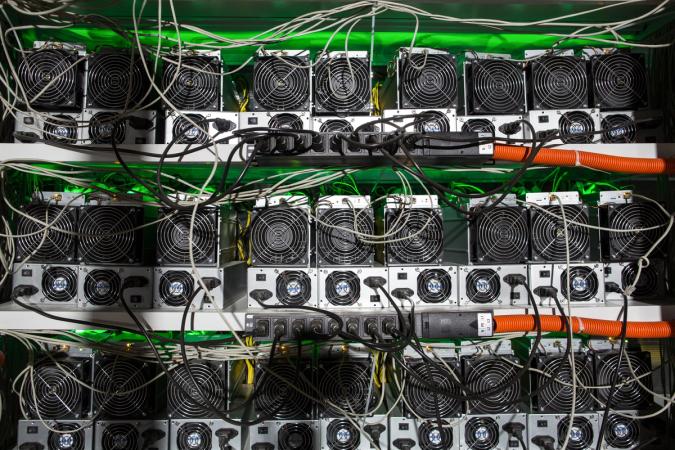
The core realization here is that Bitcoin mining was never just about the math; it was about the power. In the early days, you could win by being the first to buy the newest ASICs. Today, hardware is a commodity. The only real moat left in the industrial mining space is the cost of power and the flexibility of the grid connection.
By securing a power plant in Ohio and tying debt specifically to that physical asset, MARA is repositioning itself as an energy company that happens to compute. This is a crucial distinction for builders. If you are building in the hardware or infrastructure space, you have to realize that the 'client' for energy is shifting from the SHA-256 algorithm to Large Language Models.
Why Sell the Corn?
The decision to sell $1 billion worth of Bitcoin is the part that stings the HODL crowd. Usually, miners try to borrow against their BTC to avoid selling. Selling suggests that the cost of capital for holding that Bitcoin became higher than the potential return of investing that cash into AI-ready data centers.
As a founder, you have to respect the pragmatism. Holding a volatile asset while carrying high-interest debt is a recipe for a death spiral during a bear market. MARA is clearing the decks. They are using the current market strength to exit their debt positions and retool for a world where compute demand is diversified.
The AI Infrastructure Opportunity
Why Ohio? And why now? The Midwest has become a battlefield for data center space. AI companies are desperate for three things: high-density power, cooling, and low latency. Bitcoin mines already have the first two. However, traditional Bitcoin mines are often 'rugged'—they don't have the high-tier networking or the clean environment required for H100 clusters.
The $185 million in new debt is likely aimed at the retrofitting process. It takes more than just plugging in a different server to switch from mining to AI. You need a complete overhaul of the electrical distribution and the networking stack. This debt represents the 'Builder Tax' for transitioning from a single-purpose mining operation to a multi-purpose compute utility.
The Skeptic's Corner
We shouldn't ignore the risks here. AI compute is a low-margin, high-competition business compared to the 'lottery' upside of Bitcoin mining. When you mine BTC, you have the chance of a 10x return on the asset you produce. When you lease compute to an AI startup, you are competing with Amazon, Google, and Microsoft.
MARA is moving from a speculative tech play into a utility play. Utilities are stable, but they are rarely 'moon' stocks. The question for investors and builders is whether MARA can operate with the efficiency of a Tier 1 data center provider. It is a different culture. Mining is about uptime and hashpower. AI is about service level agreements (SLAs) and 99.999% reliability.
What This Means for Builders
If you are building in the crypto space, take note of the liquidity. The largest players are not just sitting on their hands; they are diversifying their hardware risk. If the biggest miner in the world is hedging their bets by moving into AI, you should probably be looking at how your protocol or product interacts with the broader compute economy.
We are seeing the convergence of 'Proof of Work' and 'Proof of Useful Work.' The infrastructure is becoming one and the same. For developers, this means the tools you build for managing decentralized compute or energy credits are about to become much more valuable to the legacy energy sector.
The Takeaway
MARA’s move is a signal that the 'pure-play' Bitcoin mining era is maturing into something else. They are trading their digital gold for physical transformers and cooling towers. It’s a move that prioritizes cash flow and operational stability over maximalist ideology. In a world where AI is hungry for every kilowatt-hour it can find, owning the power plant is a better bet than just owning the coins.
The moat in the next decade isn't the algorithm you run; it's the permit for the power plant you own.
Expect more miners to follow this blueprint. Sell the peak, kill the debt, and buy the power. It isn't as flashy as a 'to the moon' tweet, but it’s how you build a company that lasts longer than a halving cycle.
Read the original at CoinDesk →