The latest earnings report from Cipher Mining reads like a masterclass in modern corporate survival. At first glance, the numbers look impressive. They reported a $31 million profit for the third quarter. But if you are building in the crypto space, you know that the top-line number rarely tells the whole story. When you look closer, the actual revenue from operations dropped by more than 60 percent. That is not just a dip; it is a seismic shift in the business model.
The Accounting Illusion
For founders and developers, the most important lesson here is about accounting versus reality. Cipher didn't earn that $31 million through sheer operational excellence or mining more Bitcoin. They got there largely through a $127 million accounting gain. This is a common tactic for companies transitioning their balance sheets, but it masks an operating loss that would otherwise be concerning to any rational observer.
Mining Bitcoin is getting harder and less profitable. We knew the halving would hurt, and now we are seeing the scars. When your core business revenue drops by over 60 percent in a single quarter, you have to find a new narrative quickly. For Cipher, and many of their peers, that narrative is Artificial Intelligence.
The AI Pivot is a Real Estate Play
We need to be honest about what the "AI pivot" actually means for a Bitcoin miner. It isn't about these companies suddenly becoming experts in Large Language Models or neural networks. It is about power and land. Cipher is sitting on massive amounts of energy infrastructure. In the world of high-performance computing, kilowatts are the only currency that matters right now.
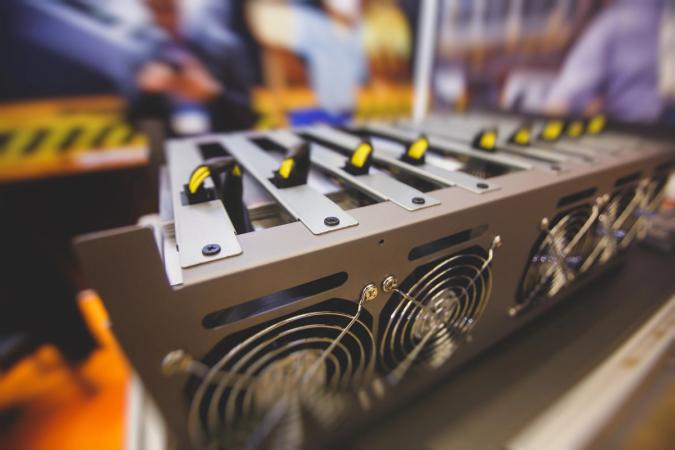
Building an AI data center is fundamentally different from building a mining rig farm. The cooling requirements are more intense, the uptime demands are non-negotiable, and the hardware costs are astronomical. Cipher is essentially trying to lease out their power capacity to the AI industry because the math for mining Bitcoin at these difficulty levels no longer makes sense for their current overhead.
Why Builders Should Care
If you are a founder in the AI space, you might see this as a win. More supply for data centers usually means better pricing. However, there is a catch. These mining facilities were built for a specific purpose. Retrofitting them for H100s or next-gen AI chips is not as simple as swapping out a few racks. It requires a complete overhaul of the electrical and cooling architecture.
The risk for the market is that we are seeing a massive shift in capital away from securing the Bitcoin network and toward centralized AI compute. While this might be good for Cipher's stock price in the short term, it creates a potential vulnerability in the decentralized ecosystem. We are watching the industrialization of crypto turn into the industrialization of AI compute overnight.
The Operational Struggle
Despite the paper profit, Cipher’s actual production numbers show the strain. The cost to mine a single Bitcoin has skyrocketed. When you factor in the depreciation of mining hardware and the increasing cost of energy, the margins are razor-thin. This is why the pivot isn't just a choice; it's a necessity for survival. A company that stays strictly in Bitcoin mining right now is essentially betting that the price of BTC will double or triple in the near term to offset the halving impacts.
The pivot to AI is less about innovation and more about finding a way to pay the electricity bill when the rewards from the blockchain aren't enough.
Builders should watch the timeline of these transitions. Cipher is moving fast, but infrastructure moves slow. They are signing deals for new sites and upgrading existing ones, but the actual delivery of AI-ready compute power is likely quarters, if not years, away from being fully realized. The market is pricing in the promise, not the performance.
The Takeaway for the Ecosystem
The lesson for founders is clear: Diversification of infrastructure is the new gold standard. If your entire business model relies on a single protocol or a single hardware type, you are at the mercy of market cycles you cannot control. Cipher is trying to hedge their bets, using their past success in crypto to fund a future in AI.
Is this a sign of the death of industrial mining? Not necessarily. But it is the end of the era where you could just plug in an ASIC and print money. The new era requires sophisticated energy management and a willingness to abandon your original mission if the spreadsheets demand it. It is cold, calculated, and necessary.
Looking Ahead
As we move into the end of the year, expect more miners to follow suit. They will all report massive paper gains from asset revaluations while their actual crypto production continues to slide. Don't get distracted by the $31 million profit headlines. Look at the revenue from operations. Look at the cost per kilowatt-hour. That is where the real story lives.
For those of us building in the trenches, it’s a reminder that hardware is heavy and energy is expensive. Whether you are mining blocks or training models, the physical world always wins in the end. Cipher is just the latest example of a company trying to stay one step ahead of that reality.
Read the original at CoinDesk →