The Monday Morning Reality Check
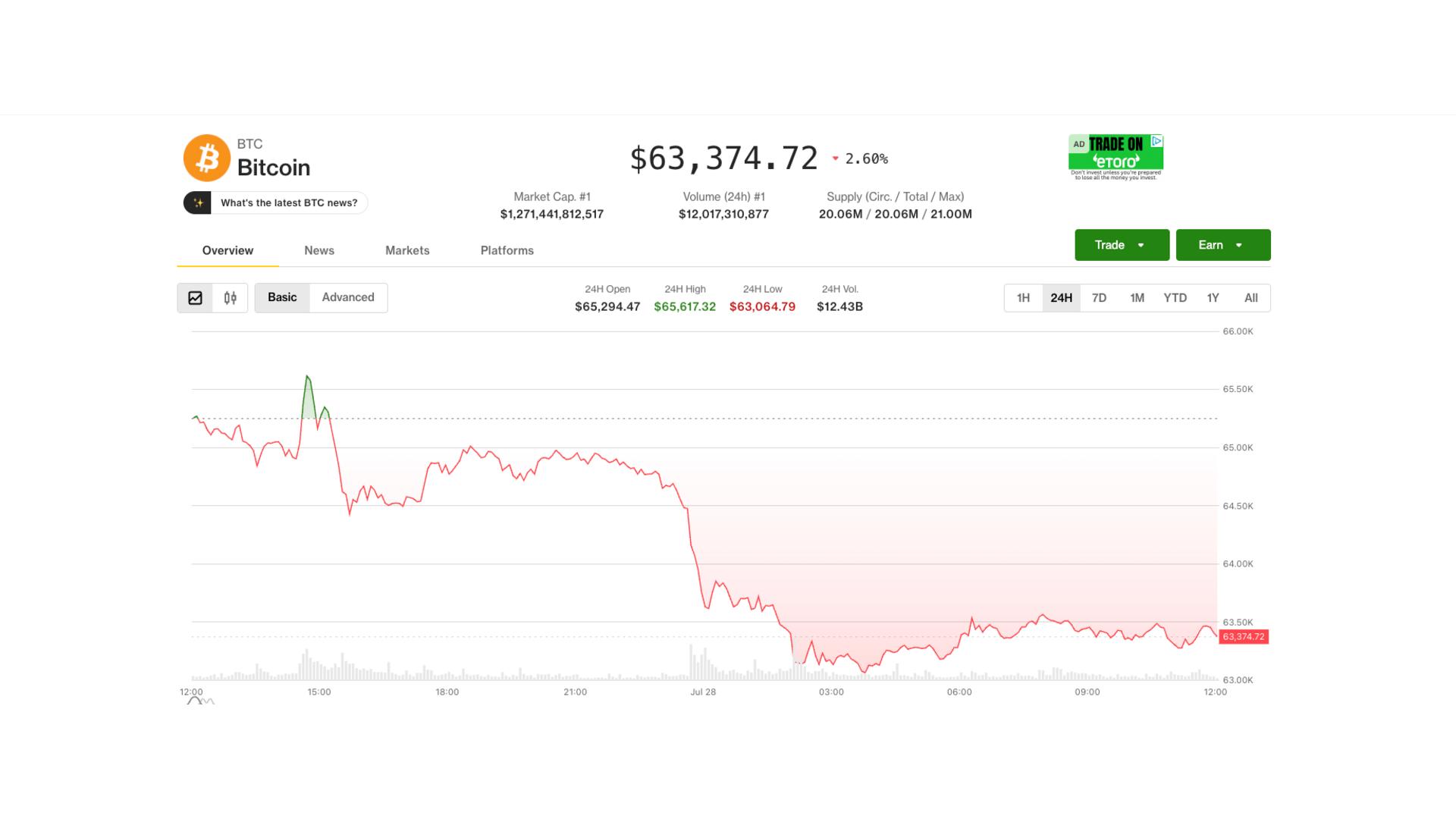
I have spent a lot of time talking to builders who think that crypto exists in a vacuum. They believe that as long as the code is good and the community is loud, the price will stay green. But the last 24 hours have been a blunt reminder that we are all part of one big, messy, global financial system. Bitcoin dropped 2% today, and while that might not sound like much for a weekend swing, the context is what matters.
We are seeing a convergence of geopolitical stress in South Korea and legislative gridlock in Washington D.C. If you are building in this space, you can't just ignore the macro anymore. The U.S. Senate just shelved the Crypto Clarity Act, and across the Pacific, the Kospi index started a freefall that wiped out months of gains. It is a one-two punch that should make every founder rethink their short-term runway.
The South Korean Signal
The 11% plunge in the South Korean Kospi is a major red flag. For years, South Korea has been one of the most proactive and retail-heavy markets for crypto. When their equity markets start to bleed, it creates a ripple effect. Institutional traders start liquidating their most liquid assets to cover margins elsewhere. In this environment, Bitcoin is the ultimate liquidity valve.
When equity markets in Asia crash, it usually precedes a volatility spike in the West. We are seeing a flight to cash, not a flight to safety. This is the irony of the current market: we want Bitcoin to be digital gold, but right now, it is behaving like a high-beta technology stock. For builders, this means the cost of capital is going to stay high and investors are going to be even more skittish than they were last month.
D.C. Gridlock and the Clarity Act
On the home front, the U.S. Senate decided to put the Crypto Clarity Act on the shelf. As someone who has watched these legislative cycles for years, I am not surprised, but I am disappointed. The lack of a clear regulatory framework is the biggest bottleneck for institutional adoption. We have plenty of talent and plenty of capital, but we don't have a rulebook.
The shelving of the Clarity Act isn't just a political delay; it's a signal to the markets that the U.S. isn't ready to lead on digital asset infrastructure yet. This leaves founders in a 'build at your own risk' zone.
Without this bill, we are back to regulation by enforcement. This creates a massive hurdle for anyone trying to build a compliant exchange, a stablecoin, or a decentralized lending protocol. If you are a founder, this news means you need to double down on your legal budget. You can't rely on Congress to fix the ambiguity anytime soon. You have to navigate the gray areas yourself, which is both expensive and risky.
Why the Fed is the Only Game in Town
While the news from Seoul and D.C. is bad, it all leads to the same place: Wednesday's Federal Reserve decision. The market is currently paralyzed waiting to see if Jerome Powell will finally signal a pivot or keep the thumb screws tight. Bitcoin’s current price action is just a prelude to that volatility.
If the Fed remains hawkish despite the global market wobbles, we could see a deeper correction. For founders, this is the time to look at your burn rate. If your business model relies on the market staying bullish to survive, you are in a dangerous position. The smart move here is to assume that the 'easy money' isn't coming back this week.
The Founder's Takeaway
I have never liked the 'to the moon' hype because it ignores the structural risks of building in a nascent industry. Today's pullback is a reminder of three core truths for builders:
- Global Macro is Local News: What happens in the South Korean stock market affects your TVL and your token price. You need to keep an eye on international markets.
- Regulatory Hope is Not a Strategy: Do not build your product assuming a specific law will pass. Build for the world as it is today—hostile and uncertain.
- Cash is King: When major indices drop 11%, liquidity vanishes. Ensure your project has enough non-crypto runway to survive a prolonged period of stagnant prices.
We are entering a phase where the 'tourists' get washed out. Usually, that is when the best products actually get built. The volatility is noise, but the regulatory stalling and the macro shift are signals. Listen to the signals, ignore the price charts, and keep shipping. The markets will eventually catch up to the value, but it is going to be a bumpy ride until the Fed speaks and Congress gets back to work.
Read the original at CoinDesk →