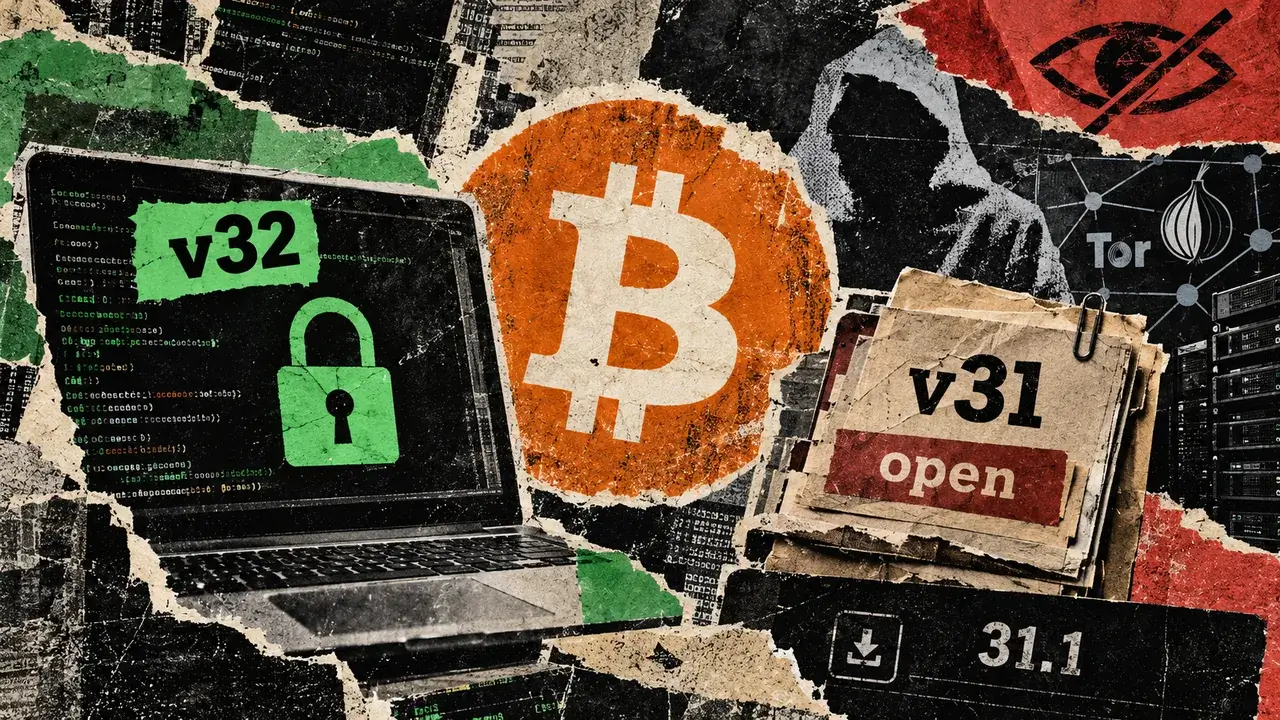
Software development in the crypto space is usually defined by a frantic rush to break things. We see it in DeFi and with every new AI wrapper. But Bitcoin Core operates on a different clock. It moves slow, sometimes painfully so. The recent news that a privacy patch has been merged into the code for version 32.0, while the fix for the current stable branch remains open, is a perfect case study in how the backbone of this industry is actually maintained.
The Privacy Hole in the Broadcast
To understand why this matters, you have to understand how Bitcoin nodes talk to each other. When you send a transaction, your node broadcasts that data to the network. The problem is that the way this data propagates can sometimes give away too much information. If a malicious actor is monitoring the network, they can correlate a transaction with a specific IP address by observing which node broadcast it first. This isn't just a theoretical concern; it is a fundamental privacy leak that has existed for a long time.
The fix in question is an opt-in private broadcast mechanism. It is designed to change how nodes relay information, making it significantly harder for outside observers to map a transaction back to its source. It is not a silver bullet that makes Bitcoin anonymous, but it is a necessary brick in the wall of user protection. The fact that this is finally landing in the v32.0 codebase is a win, but the timeline tells a deeper story about the project's priorities.
The Versioning Gap
Right now, if you go to the Bitcoin Core site, the stable download is version 31.1. That is the version the vast majority of node operators are running. The privacy fix has been successfully merged into the master branch, which will eventually become v32.0. However, the backport—the process of taking that fix and applying it to the current stable version 31.x—is still open and unmerged.
For a founder or a builder, this looks like a bottleneck. In a startup, if you find a privacy bug, you patch the current live version immediately. In Bitcoin, the process is much more conservative. The developers are balancing the need for privacy against the risk of introducing a bug that could fork the network or cause consensus issues. They are choosing to move the fix forward into the future release while cautiously debating how to integrate it into the present.
What This Means for Builders
If you are building products on top of Bitcoin, this highlights the long-term nature of the protocol. We often talk about Bitcoin as a finished product, a digital gold that just sits there. But it is active software with active vulnerabilities. When you build a wallet or a service that relies on node connectivity, you are inheriting the privacy limitations of the Core software.
Builders need to realize that privacy isn't something they can just outsource to the base layer. Even with this new fix, privacy remains opt-in and requires specific configuration. If you are developing an application and you tell your users they are private just because they are on Bitcoin, you are lying to them. You have to understand the specific limitations of the node software and design your UX to account for the lag in these protocol-level updates.
A Founder's Perspective on Development Speed
There is a lot of talk about how AI is going to speed up coding, and how we can ship faster than ever. But you cannot ship "fast" on a protocol that secures a trillion dollars in value. The Bitcoin Core developers are essentially performing open-heart surgery on a marathon runner while he is mid-stride. The delay in backporting the v31.x patch isn't necessarily a sign of incompetence; it is a sign of extreme caution.
However, as a founder, I find the friction here fascinating. We spend so much time worrying about our front-end or our user acquisition, but the entire industry rests on a handful of developers debating the minutiae of a broadcast patch. This is the ultimate technical debt. If the base layer doesn't get privacy right, every layer built on top of it—Lightning, Liquid, or whatever else—is compromised from the start.
The Skeptic's Take
We should be careful not to overstate what this fix actually does. An "opt-in" privacy feature is only as good as the number of people who actually turn it on. Most users will never touch their node settings. Most users aren't even running their own nodes; they are using third-party services. This patch helps the network's health, but it doesn't solve the broader issue of metadata leakage for the average person holding 0.01 BTC on a mobile app.
We also have to ask why the v31.x backport is taking longer. Usually, this suggests there are concerns about how the new code interacts with the existing stable environment. It is a reminder that in decentralized systems, the "fix" is never as simple as just pushing a new build to a centralized server. It requires consensus, testing, and a level of scrutiny that would kill most startups.
Takeaway for the Ecosystem
The lesson here for builders is twofold. First, watch the Bitcoin Core GitHub, not just the headlines. The gap between a merge in the master branch and a stable release is where the real work happens. Second, don't wait for the protocol to save your users' privacy. If privacy is a core part of your value proposition, you need to be building those protections at the application level today.
Bitcoin is evolving, but it is doing so at its own pace. The arrival of the privacy fix in the v32.0 code is a milestone, but it is not the finish line. As builders, we have to navigate the reality of a base layer that prioritizes stability over speed, even when privacy is on the line. Stop waiting for the perfect version of Bitcoin; build for the version that exists now, while keeping a close eye on the one that is coming next year.
Read the original at CryptoSlate →