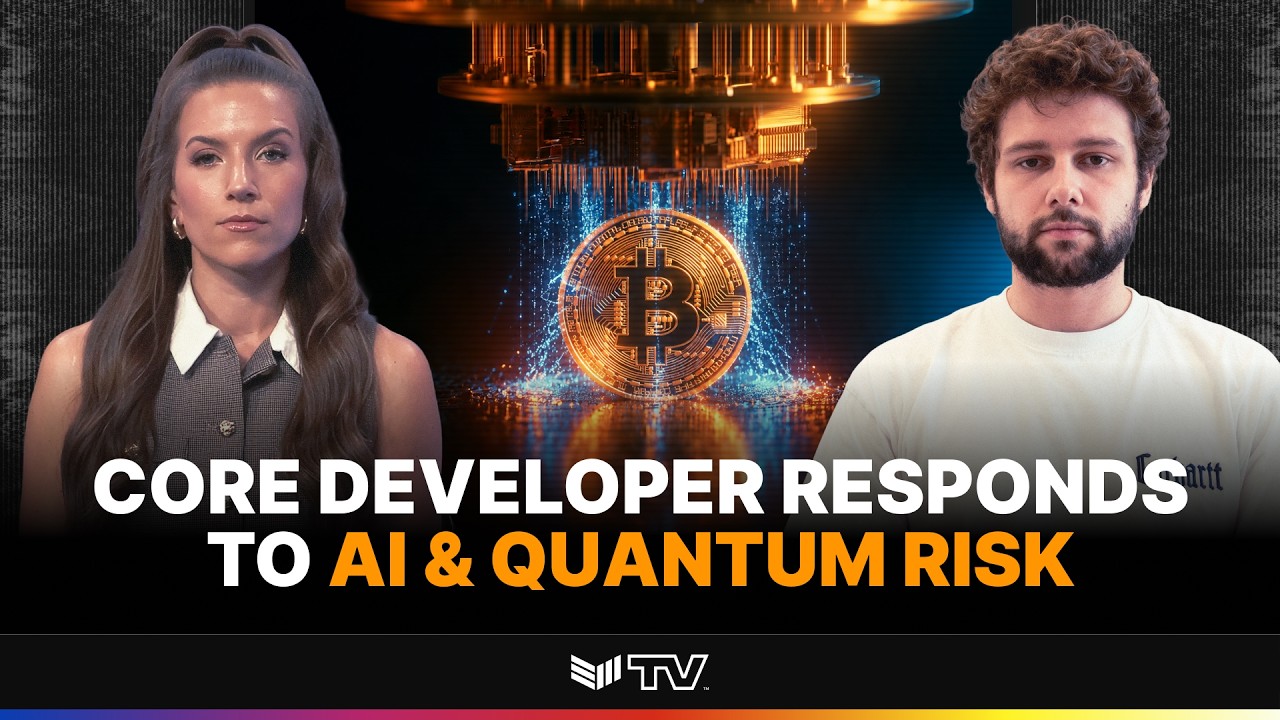
The crypto world loves a good apocalypse scenario. Lately, the bogeyman of choice is the intersection of artificial intelligence and quantum computing. The narrative is simple: a bad actor uses AI to optimize quantum algorithms, cracks Bitcoin’s ECDSA encryption, and empties every wallet on the network before breakfast. It makes for a great headline, but if you are actually building in this space, you need to separate the theoretical physics from the engineering reality.
The Viral Fear Factor
Recently, the conversation reached a fever pitch following comments from researchers like Justin Drake, who suggested that the timeline for quantum threats might be shrinking faster than we anticipated. When someone of that stature sounds the alarm, the market listens. But Antoine Poinsot of Chaincode Labs recently stepped in to provide a necessary reality check. As a Bitcoin Core developer, his perspective isn't about the hype cycles; it is about the code.
For founders, the takeaway from this back-and-forth isn't that you should panic-sell your stack. It is that the Bitcoin network is a living protocol, not a static monument. The fear-mongering assumes that Bitcoin will sit idly by while quantum computers evolve. In reality, the path to quantum resistance is already being mapped out, even if we aren't rushing to implement it today.
Why AI Isn't a Magic Key
There is a common misconception that AI will somehow "solve" cryptography. People think of AI as a super-intelligence that can guess a private key through sheer intuition. That is not how math works. AI is excellent at pattern recognition and data optimization, but it cannot bypass the fundamental laws of thermodynamics or the sheer computational impossibility of brute-forcing a 256-bit key on classical hardware.
Even with quantum assistance, AI doesn't just "break" Bitcoin. Shor’s algorithm is the primary theoretical threat here, and it requires a stable, high-qubit quantum computer that simply doesn't exist yet. Most current quantum machines are noisy, error-prone, and nowhere near the scale required to threaten the network. AI might help researchers optimize those noisy systems, but it doesn't shorten the bridge from a few dozen qubits to the millions required for a full-scale attack.
The Developer's Dilemma
From a founder’s perspective, the real risk isn't the technology itself, but the trade-offs involved in "fixing" it too early. As Poinsot pointed out, implementing post-quantum cryptography (PQC) today would come with massive costs. PQC signatures are significantly larger than the current Schnorr or ECDSA signatures. If we moved to quantum-resistant addresses tomorrow, the size of the blockchain would balloon, transaction fees would spike, and the hardware requirements for running a node would jump.
This is the classic engineering dilemma: do you solve a problem that might exist in ten years at the cost of breaking your product today? In the Bitcoin world, the answer is usually a resounding "no." We value stability and backward compatibility above almost everything else. The "fix" for quantum risk is already known; it just isn't worth the cost of admission yet.
The Migration Path
If a viable quantum threat actually emerges, Bitcoin doesn't just die. The protocol would undergo a soft fork to introduce new, quantum-resistant output types. Users would then move their funds from old addresses to these new ones. The only people truly at risk would be those with lost keys or those who refuse to move their funds for decades. For the active builder and the modern user, the transition would be a managed event, not a sudden collapse.
Building for the long term means ignoring the noise of 'imminent' threats that require technology that hasn't been invented yet. Focus on the scaling problems we have today, not the sci-fi problems of tomorrow.
What Founders Should Watch
If you are building an AI or crypto startup, don't let the quantum debate distract you from your roadmap. However, there are three things you should keep an eye on to stay informed:
- Signature Aggregation: Watch how Bitcoin continues to optimize signature data. Improvements here make the eventual transition to larger quantum-resistant signatures less painful.
- Quantum Volume: Instead of listening to AI hype, watch the actual hardware milestones from companies like IBM or IonQ. We are still orders of magnitude away from a credible threat.
- Soft Fork Culture: Pay attention to how the Bitcoin community handles smaller upgrades. The speed and consensus reached on minor changes will tell you how effectively the network will respond to a major security threat when the time comes.
A Skeptic's Final Word
The intersection of AI and quantum computing is a fascinating field for academic research, but for the crypto industry, it is currently a distraction. We see this cycle every few years: a new technology emerges, and someone claims it will be the "Bitcoin killer." First it was centralized cloud computing, then it was regulatory bans, and now it is quantum-AI hybrids.
The network has a way of absorbing these threats and turning them into technical debt that eventually gets paid down. As a founder, your job is to build tools that people need now. If you spend all your time worrying about a quantum winter, you'll miss the actual opportunities in the current market. Bitcoin is remarkably resilient because its developers, like Poinsot, are focused on the math and the trade-offs, not the viral Twitter threads. Keep your head down and keep building.
Read the original at Bitcoin Magazine →