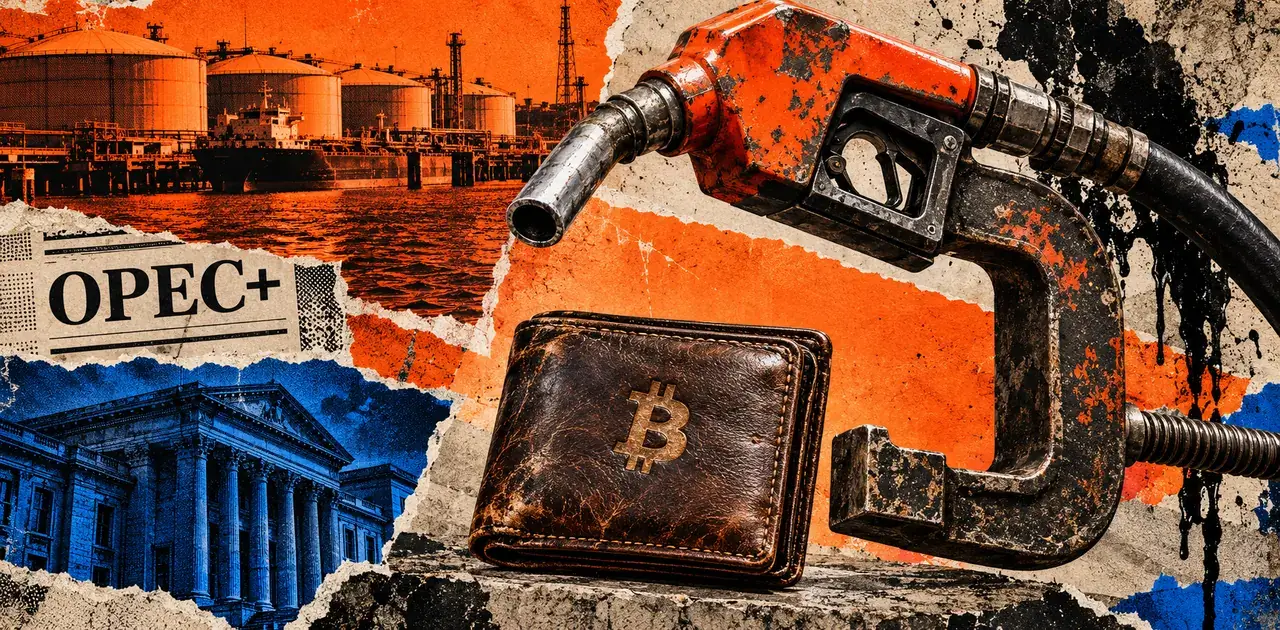
We have reached a weird point in the market cycle where crypto founders spend as much time looking at oil rigs in the Middle East as they do looking at GitHub commits. It feels counterintuitive, but if you are building in this space, you need to understand that the price of a barrel of crude is currently one of the biggest governors on Bitcoin's growth.
The Gasoline Trap
The recent Consumer Price Index data showed something we have suspected for a while: energy is the tail wagging the dog. In September, gasoline costs were the primary driver behind the monthly rise in inflation. This puts Bitcoin in a tough spot. Usually, the narrative is simple: inflation goes up, people buy Bitcoin as a hedge. But that is the retail theory. The reality for the institutions and builders who actually move the needle is different.
When energy prices spike, the Federal Reserve gets nervous. When the Fed gets nervous, they keep interest rates high. High rates mean the "risk-on" liquidity that fuels crypto startups and Bitcoin buys starts to dry up. We saw a brief moment of relief recently when oil prices dipped, giving Bitcoin a bit of room to breathe, but that window is closing fast.
The OPEC Factor
OPEC+ is not exactly interested in helping the Silicon Valley or crypto ecosystem. Their recent signals regarding production constraints are a direct threat to the "Goldilocks" scenario many crypto investors were hoping for. If OPEC continues to tighten the taps, energy prices stay high. If energy prices stay high, the Fed has zero incentive to cut rates or pivot toward a more dovish stance.
For a founder, this is the difference between a seed round that closes in two weeks and one that drags on for six months. We are essentially watching a geopolitical chess match where the board is the global energy supply and the stakes are the cost of capital for the next generation of software.
Why Builders Should Care
I talk to a lot of developers who think macroeconomics is just noise. They think as long as the code is good, the market will follow. That is a dangerous way to run a business. You have to understand the environment you are deploying into. If we are entering a period of persistent oil constraints, we are also entering a period of persistent financing constraints.
- Burn rates matter more: You cannot rely on a quick injection of cheap capital if the Fed is stuck fighting energy-driven inflation.
- Infrastructure costs: High energy prices eventually trickle down to data center costs. Your AWS or Google Cloud bill is not immune to what OPEC does.
- User acquisition: When people are paying more at the pump, they have less discretionary income to bridge into new protocols or buy digital assets.
The Liquidity Correlation
Bitcoin has spent much of the last year acting more like a high-beta tech stock than a sovereign currency. It thrives on excess liquidity. When oil prices fall, it acts as a de facto tax cut for the entire economy, freeing up capital that eventually finds its way into the digital asset market. When OPEC artificially supports those prices, they are effectively sucking the oxygen out of the room for risk assets.
We saw Bitcoin catch a break recently because of a temporary dip in crude, but it felt like a hollow victory. The underlying tension remains. The market is waiting for a signal that the inflation fight is over, but as long as energy remains volatile, that signal is going to be delayed.
The Skeptical Take
Let’s be honest: Bitcoin was supposed to be the thing that didn't care about the Fed or oil. That was the original pitch. But as the asset has matured and become integrated into the legacy financial system, it has inherited the legacy system's problems. We are no longer in an isolated sandbox.
I don't think this means the bull case is dead, but I do think it means the "easy money" phase is being pushed further into the future. If you are building a project right now, you should be planning for a high-interest-rate environment that lasts longer than the pundits on Twitter are telling you. OPEC’s moves suggest they are willing to play the long game to keep prices elevated, and the Fed is forced to react to that reality, not to our desire for a crypto rally.
The biggest mistake a founder can make right now is assuming that a Bitcoin price surge is inevitable in the short term. The macro environment is currently a headwind, not a tailwind.
Strategic Adjustments
So, what do you do? If you are running a crypto project, you stop looking at the 15-minute Bitcoin chart and start looking at the 10-year Treasury yield and the price of Brent Crude. These are the real indicators of whether or not new money is coming into the ecosystem.
Focus on utility that doesn't depend on a bull market. Build tools that solve problems regardless of whether Bitcoin is at $30k or $70k. The projects that survived the last few cycles were the ones that didn't treat the market's volatility as a business plan. They treated it as a weather pattern they had to endure.
The Bottom Line
Bitcoin is currently a hostage to energy macroeconomics. While falling oil prices provided a momentary reprieve, the looming shadow of OPEC+ production cuts means the Federal Reserve is unlikely to provide the financing relief the crypto industry is craving. For builders, the message is clear: keep your head down, watch your margins, and don't expect a macro-driven bailout anytime soon. The path forward is through building actual value, not waiting for the Fed to turn the liquidity taps back on.
Read the original at CryptoSlate →