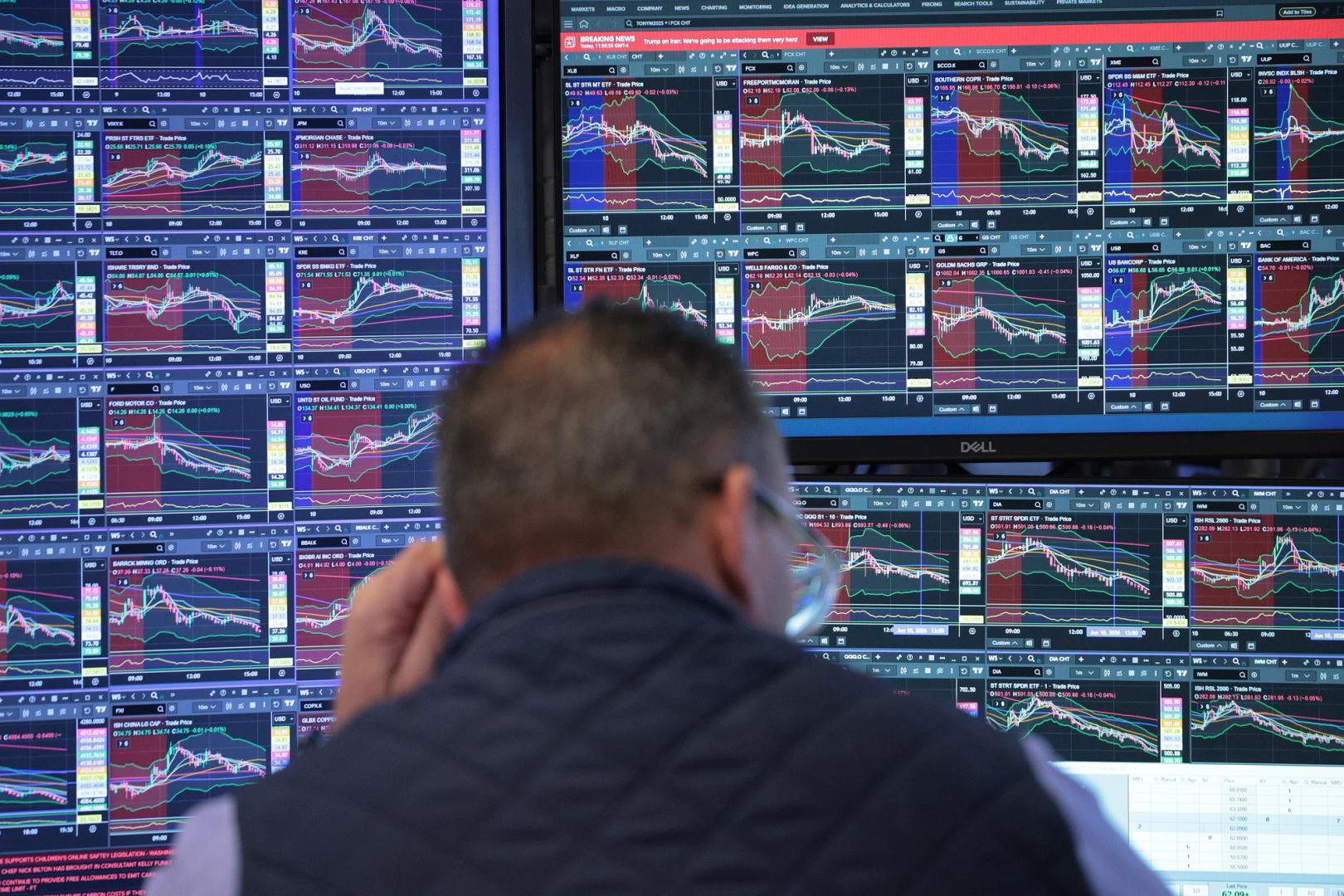
I have spent a decade watching people draw lines on charts to justify their wildest dreams. Lately, the crystal balls are coming out again, with analysts projecting Bitcoin to hit anywhere from $300,000 to $500,000 by 2029. It sounds great in a headline. It makes for a wonderful YouTube thumbnail. But as someone who builds in this space, I have to look at the math, not the moonshots.
We have entered the era of diminishing returns. It is the natural lifecycle of any asset that moves from the fringes of the internet into the heart of global finance. The problem with these half-million-dollar predictions is that they often ignore the sheer level of capital required to move a trillion-dollar needle. When the market cap was small, it didn't take much to double the price. Today, the physics of the market have changed.
The Math Problem
To get Bitcoin to $500,000, we aren't just talking about a few more hedge funds buying the dip. We are talking about an influx of capital that rivals the GDP of major nations. For the price to quintuple from current levels, the market capitalization would need to swell to roughly $10 trillion. For context, that is nearly the entire market value of gold held globally.
Is it possible? Sure. Is it probable within the next five years? That is where the skepticism kicks in. Every four-year cycle we have seen since Bitcoin's inception has resulted in a smaller percentage gain than the one before it. In the early days, you could see 100x returns. Then it was 20x. Then 10x. The trend is clear: as Bitcoin matures, its volatility decreases, and its growth curve flattens. This is actually a sign of success, but it is a nightmare for the 'get rich quick' crowd.
Why Builders Should Care
If you are building a product or a startup in the crypto space, you need to decouple your roadmap from these institutional fantasies. Relying on a $500,000 Bitcoin to make your business model work is a gamble, not a strategy. We are moving into a phase where the value of the network will be driven by utility and integration, not just speculative hoarding.
When I look at the landscape for 2029, I see a world where Bitcoin is a boring, stable layer of the global financial stack. If it hits $150,000 or $200,000, that is still an incredible achievement. The obsession with hitting half a million dollars stems from a desire to maintain the 'casino' energy of the early 2010s. But the casino is being replaced by a bank, and banks are rarely that exciting.
- Institutional limits: Pension funds and sovereign wealth funds have strict risk mandates. They aren't going to pile in at a rate that causes a 500% spike in five years.
- Market saturation: Most people who want to own Bitcoin in the West already do, or at least have an easy way to buy it. The 'new buyer' pool is shrinking.
- Regulatory drag: More adoption means more oversight. Oversight usually leads to lower volatility, which kills the parabolic runs we used to love.
The Institutional Ceiling
There is a narrative that the spot ETFs were the starting gun for a race to the moon. In reality, they might be the anchor that keeps the price grounded. ETFs allow for institutional shorting, hedging, and sophisticated arbitrage that previous retail-driven cycles didn't have to deal with. Professional traders are very good at sucking the volatility out of an asset.
Furthermore, we have to look at the macro environment. The liquidity cycles of the last decade were fueled by zero-interest-rate policies and massive government printing. If we are entering a period of 'higher for longer' interest rates, the cheap money that fueled the previous moonshots simply isn't there. Bitcoin has to compete with bonds that actually pay a yield. That changes the calculus for every big player in the room.
The Real Opportunity
The real opportunity isn't in the price of the token; it is in the infrastructure being built around it. If Bitcoin 'only' hits $200,000 by 2029, the industry will still be massive. But the winners won't be the people who bought and hoped for $500,000. The winners will be the founders building the Lightning Network tools, the custody solutions, and the AI-driven trading platforms that thrive on stability rather than chaos.
The era of the 10x Bitcoin cycle is likely dead. What replaces it is a long, slow grind toward becoming a global reserve asset. That is a better outcome for the world, even if it is worse for your portfolio's screenshots.
A Reality Check for 2029
When you see these massive price targets, ask yourself who benefits from the hype. Usually, it is people looking to exit their positions or sell you a newsletter. As builders, we have to be the adults in the room. We have to look at the liquidity, the market cap, and the historical decay of returns.
We are currently in a transition period. Bitcoin is moving from a 'tech play' to a 'macro play.' In the macro world, a 2x or 3x return over five years is considered legendary. If we can't be happy with that, we aren't investors; we're just gamblers waiting for a jackpot that the math no longer supports.
The Takeaway
Stop waiting for the $500,000 miracle. The math suggests we are looking at a much more modest, controlled growth path. Build your company and your life around the version of Bitcoin that exists today—a maturing, highly liquid, but slowing asset. The moon is a lot further away than the charts want you to believe, but the ground we are standing on is getting firmer every day.
Read the original at CoinDesk →