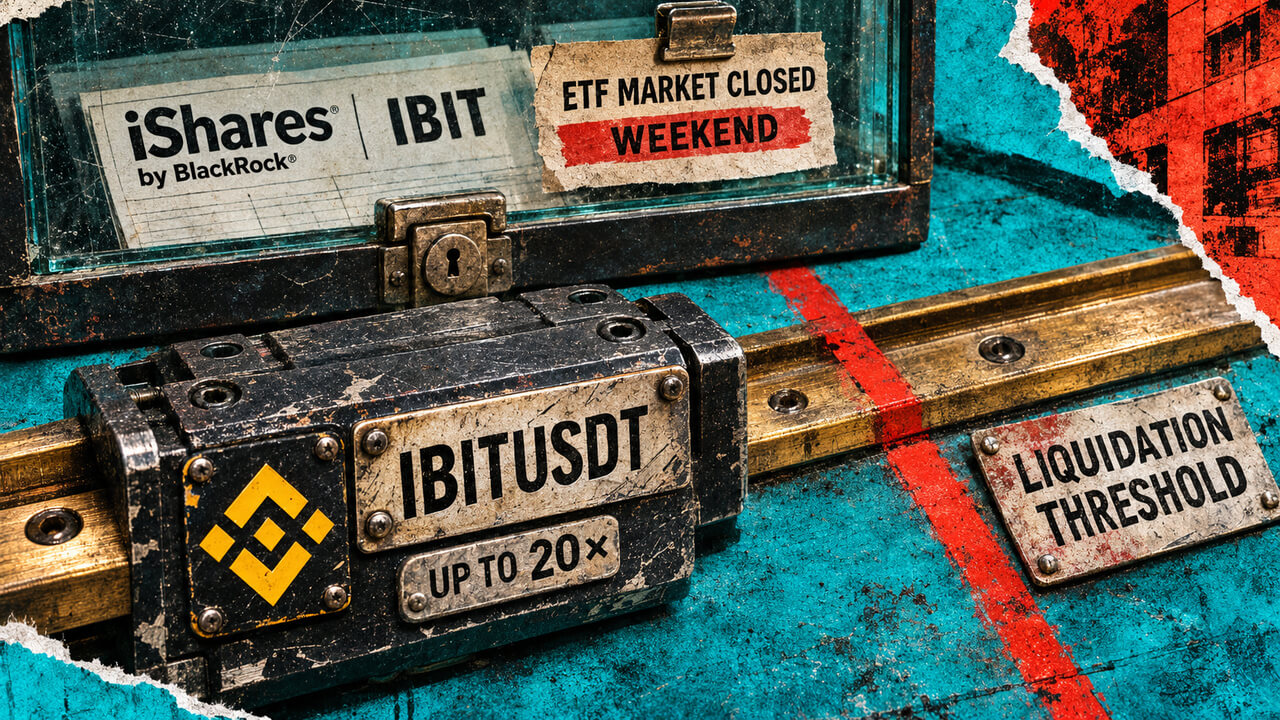
We are seeing the final walls between TradFi and crypto collapse, but not in the way the suits at BlackRock probably expected. Binance just listed a USDT-settled perpetual contract for the IBIT ETF. This means you can now trade a derivative of a spot bitcoin fund on a platform that the fund's own issuer isn't technically supposed to touch. It is meta, it is a bit messy, and it is exactly the kind of market inefficiency builders should be watching.
The Irony of the 24/7 Wrapper
The core value proposition here is simple: access. BlackRock’s IBIT is the most successful ETF launch in history, but it is still shackled by the Nasdaq’s operating hours. If Bitcoin moves 10% on a Sunday morning—which it often does—ETF holders are stuck staring at a frozen screen until the Monday morning bell rings. Binance has essentially hacked this limitation by creating a perpetual market that never sleeps.
For the average retail trader, this looks like a win. You get 20x leverage on a regulated product through an unregulated venue. But for founders and developers in the DeFi space, this is a clear signal. The market is demanding a bridge between institutional products and crypto-native liquidity. If Binance can do this with a centralized order book, the race is on to see who can do it on-chain with real transparency.
Why This Matters for Builders
If you are building in the RWA (Real World Asset) space, this move by Binance is a proof of concept. It proves that people want to trade traditional tickers using crypto rails. We have spent years talking about tokenizing stocks or real estate, yet the most successful "tokenized" stock product right now is a perpetual future on a Bitcoin fund. It is circular, but the volume doesn't lie.
Builders should look at the mechanics of this launch. Binance is using a mark price that can trigger liquidations even when the underlying Nasdaq market is closed. This introduces a specific kind of oracle risk that we haven't seen at this scale before. If you are developing decentralized perps or synthetic assets, the challenge is clear: how do you maintain a fair price when the primary source of truth (the Nasdaq) is offline?
The Hidden Liquidation Risk
This is where the skepticism kicks in. Trading a 20x leveraged product on an ETF that is already a derivative of an underlying asset is a recipe for volatility. Binance’s system relies on its own internal mark price during the weekends. This means the price of your "BlackRock" exposure on a Saturday night is determined by the traders on Binance, not by the actual net asset value of the fund held by BlackRock.
We have seen what happens when synthetic markets de-peg from their underlying assets. For a founder, this is a cautionary tale about liquidity depth. If the Binance IBIT market becomes thin, a single whale could trigger a liquidation cascade that has zero basis in the actual price of Bitcoin. It is a high-stakes experiment in market psychology.
Bridging the Gap
We are entering an era where the ticker matters more than the settlement layer. To a trader in Southeast Asia or Eastern Europe, IBIT is just a ticker that represents Bitcoin with a perceived layer of institutional safety. They don't care that it's settled in USDT on a global exchange instead of USD on a brokerage. They want the volatility and the 24/7 uptime.
This creates a massive opportunity for middleware builders. We need better cross-chain margin systems and more robust oracles that can bridge the gap between traditional market hours and the crypto clock. If the future of finance is a blend of BlackRock’s assets and Binance’s engine, we need a decentralized glue to hold it together so it doesn't just become another black-box system.
The Regulatory Paradox
It is worth noting the regulatory gymnastics required here. These contracts aren't available to users in the U.S. or other restricted jurisdictions. Yet, the product itself is based on a U.S. regulated fund. This highlights the fragmentation of the global market. While the SEC fights over every comma in a filing, the rest of the world is busy building secondary and tertiary markets that bypass those restrictions entirely.
As a founder, you have to decide which side of that fence you are building on. Are you building for the regulated silo, or are you building for the global, permissionless liquidity pool? Binance has clearly chosen the latter, and by doing so, they are forcing the hand of traditional exchanges to eventually offer extended hours or risk losing relevance.
A Lesson in Product-Market Fit
The takeaway here isn't just about another trading pair on Binance. It is a lesson in product-market fit. People want the prestige of Wall Street names with the flexibility of crypto. They want the "IBIT" brand but they want to trade it at 3:00 AM on a Saturday with USDT.
If you can find other ways to wrap institutional credibility in a crypto-native experience, you have a winning product. The demand for 24/7 access to traditional financial instruments is only going to grow. The question is whether we will build these as centralized derivatives or as transparent, on-chain protocols.
The Final Word
Don't get blinded by the 20x leverage hype. The real story is that the walls are down. The biggest crypto exchange is now a primary venue for trading the biggest Wall Street Bitcoin product. For builders, the path forward is to create the infrastructure that makes this process safer, more transparent, and less reliant on a single centralized entity's mark price. The weekend gap is closing, and the builders who bridge it first will win the next cycle.
Read the original at CryptoSlate →