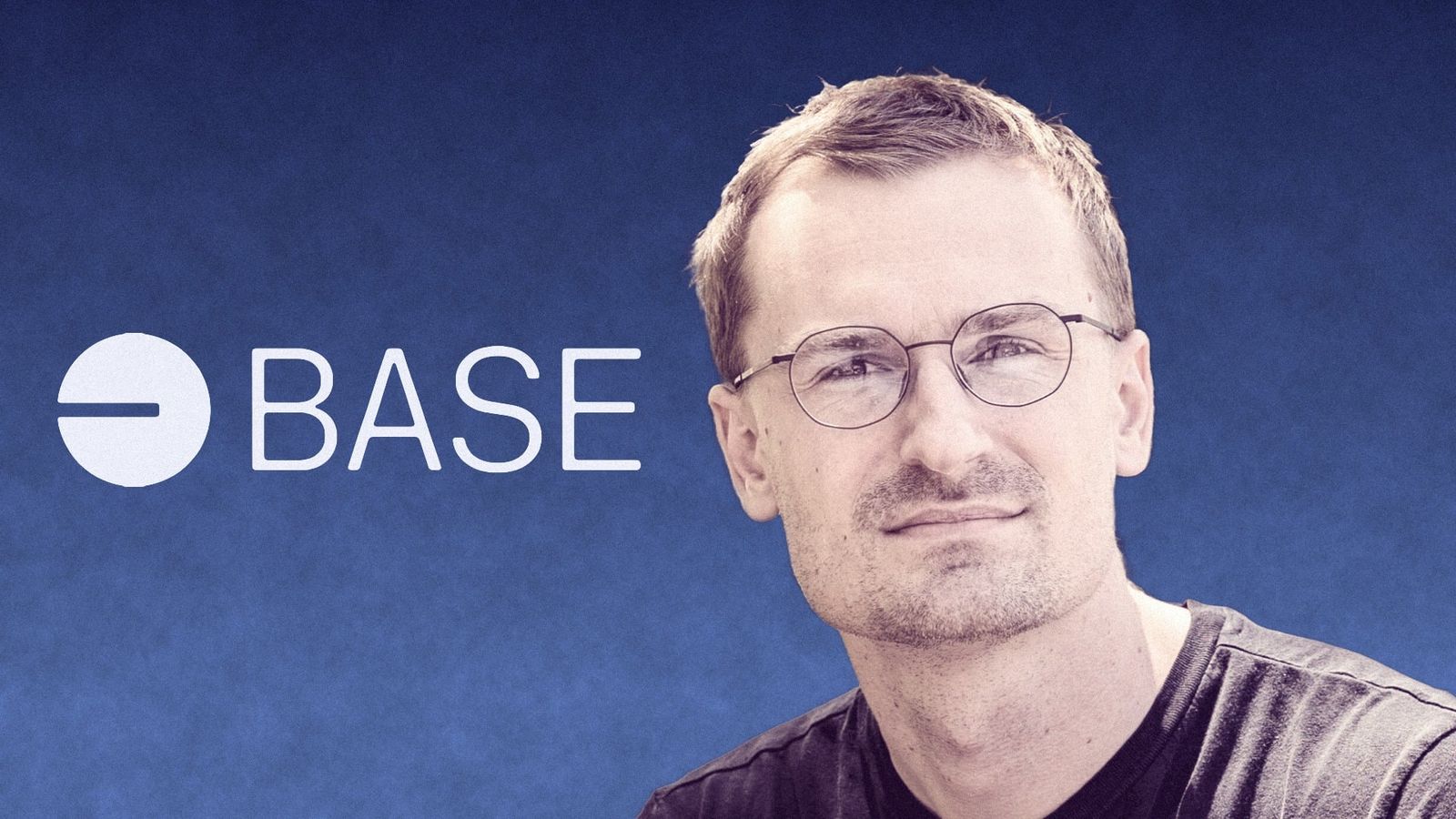
We have been hearing about the promise of tokenization for nearly a decade. First, it was the 2017 ICO craze where everything from real estate to art was going to live on a blockchain. Then it was the security token offering era that largely fizzled under regulatory weight. Now, Jesse Pollak and the team at Base are signaling that the real shift is finally arriving, but it looks less like a revolution and more like a quiet migration of traditional infrastructure.
Pollak is calling this the tokenization supercycle. It is a bold term for a guy who usually keeps his head down on the technical side of Coinbase’s L2, but the early data points suggest he is onto something. The focus isn't just on bringing more dollars to the chain; it is about bringing everything else that moves the global economy, specifically equities and non-dollar stablecoins.
The Quiet Success of On-Chain Equities
About six weeks ago, Coinbase enabled tokenized stocks on Base. For most of the crypto community, this barely registered as a blip. We were too busy tracking meme coin seasonal rotations and new L2 airdrop rumors. However, the volume tells a different story. According to Pollak, these tokenized assets are already seeing daily volumes between $70 million and $100 million.
For a new product in a fragmented market, those numbers are significant. They suggest that the appetite for 24/7 trading and instant settlement is not just theoretical. When you take the friction out of the middle—the clearinghouses, the T+2 settlement delays, and the high-fee brokers—the value proposition for the end-user becomes undeniable. For builders, this is a signal that the infrastructure is finally mature enough to handle high-value traditional finance products without falling over.
Why Non-Dollar Stablecoins Matter
The second pillar of this supercycle is the rise of non-dollar stablecoins. For years, the crypto industry has been a dollar-denominated silo. If you wanted to play in DeFi, you used USDT or USDC. While that worked for the early adopters, it is a non-starter for global trade and local economies that do not want to be tethered to U.S. monetary policy or currency fluctuations.
Pollak argues that for tokenization to reach a global scale, we need local representations of value. Bringing the Euro, the Yen, or the Real onto the chain allows for actual cross-border commerce that does not require a double-conversion through the dollar. This is where the real utility lies. It is not about speculation; it is about reducing the cost of doing business globally. If you are a founder building a payments app in Brazil, a dollar-backed stablecoin is a hedge, but a tokenized Real is a tool for daily life.
What This Means for the Builder
As a founder, it is easy to get distracted by the shiny new toy in the room. But if you look at where the capital is actually flowing, it is moving toward these regulated, high-utility assets. The tokenization supercycle is not about launching another governance token. It is about building the middleware that connects these assets to the real world.
We need better identity solutions, better compliance rails that don't suck the soul out of the user experience, and better bridges between legacy banking systems and the EVM. If Pollak is right, the next wave of successful startups will not be 'crypto companies' in the traditional sense. They will be financial service providers that happen to use Base or other L2s as their primary ledger because it is faster and cheaper than the alternatives.
A Healthy Dose of Skepticism
Of course, we have to look at the hurdles. Regulation is still the primary bottleneck. Just because the technology can handle $100 million in daily equity volume does not mean the SEC or international regulators are going to let it scale to trillions without a fight. The technical plumbing is ready, but the legal plumbing is still leaking everywhere.
Pollak’s optimism is grounded in what he sees happening on the ground at Base, but builders should remain cautious. The 'supercycle' won't happen overnight. It will be a slow, boring transition where traditional assets are wrapped, verified, and traded in increasingly large volumes. The winners won't be the ones shouting the loudest on social media; they will be the ones building the quiet, boring infrastructure that makes this transition seamless for the average user.
The Long Game
The takeaway here is simple: the focus is shifting from native crypto assets to the tokenization of the entire financial world. If you are building today, you should be asking how your product interacts with these real-world assets. The era of building in a vacuum is over. Whether it is equities, debt, or non-dollar currencies, the goal is to make the blockchain invisible and the utility undeniable.
We are moving past the 'crypto for crypto’s sake' phase. Jesse Pollak’s vision for Base suggests that the future of the chain is as a global, permissionless settlement layer for everything that has value. For those of us building in this space, that is the most exciting prospect we have seen in years.
Read the original at The Block →