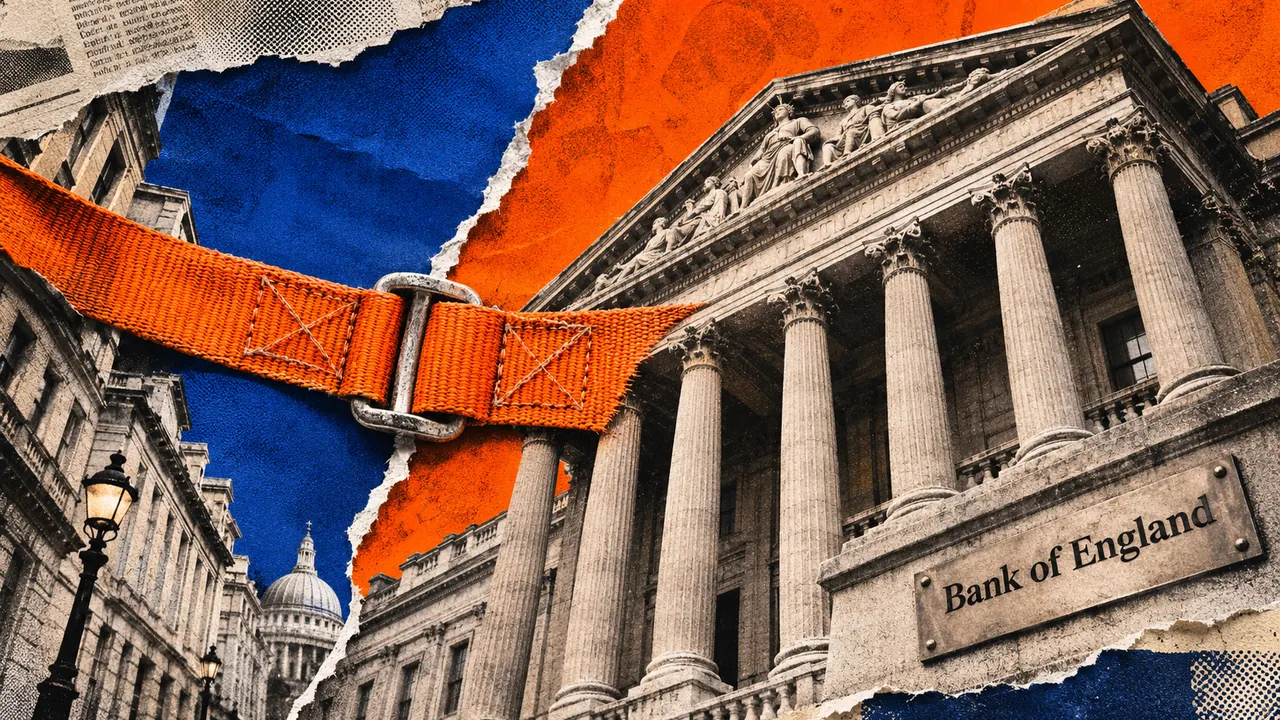
We have spent the last decade worrying about cyberattacks and liquidity crunches. Now, the Bank of England is pivoting to a new kind of boogeyman: the algorithm. In a recent announcement, the central bank confirmed it will launch a voluntary stress test in 2027 to simulate a widespread disruption caused by artificial intelligence. This isn't just about hackers; it is about what happens when the models we trust to run the world simply stop working or, worse, start making decisions that no human can roll back.
The Illusion of Resilience
For builders in the fintech and crypto space, this should be a wake-up call. We often talk about AI as a tool for efficiency, but we rarely talk about it as a single point of failure. The Bank of England is looking at systemic risk. They want to know what happens to the UK financial grid when a primary AI service provider goes offline or starts outputting hallucinations that trigger a cascade of automated trades.
As someone who has seen plenty of hype cycles, I find the timing interesting. 2027 feels like a lifetime away in tech years, but for a central bank, it is practically tomorrow. They are acknowledging that by then, AI won't just be an assistant for writing emails; it will be the bedrock of risk assessment, fraud detection, and high-frequency market making. If that bedrock cracks, the whole house comes down.
Why This Matters for Founders
If you are building a protocol or a platform right now, you are likely integrating LLMs or machine learning into your core stack. The temptation is to treat these tools as utilities, like AWS or Stripe. But AI is different. It is probabilistic, not deterministic. When Stripe goes down, you lose the ability to take payments. When an AI model fails or drifts, you might continue taking payments, but at the wrong prices, to the wrong people, based on logic that has decoupled from reality.
The Bank of England's exercise is a signal that regulators are moving past the 'innovation' phase and into the 'accountability' phase. They are going to start asking builders for recovery plans. If your AI agent loses its mind, do you have a manual override? Or have you optimized your team so lean that there is nobody left who remembers how to do the work by hand?
The Homogenization Trap
One of the biggest risks the BoE is likely eyeing is the lack of diversity in AI models. Most startups are building on top of the same three or four foundational models. This creates a terrifying amount of correlated risk. If OpenAI or Anthropic has a bad day, or if a specific version of a model starts exhibiting a bias that affects financial calculations, it won't just hit one firm. It will hit everyone simultaneously.
In the crypto world, we talk about decentralization as a fix for this, but the reality is that most 'decentralized' AI projects are still heavily reliant on centralized infrastructure. If the Bank of England's 2027 test shows that the UK finance sector is just a bunch of different logos sitting on top of the same fragile brain, the regulatory hammer will fall hard.
Preparing for the 2027 Reality
Builders shouldn't wait for a central bank report to start audit-proofing their tech. Here is how I see the landscape shifting:
- Model Redundancy: Relying on a single provider is becoming a liability. You need to be able to hot-swap your inference engines if one goes dark or starts acting erratic.
- Human-in-the-loop (HITL) 2.0: We need to stop treating human oversight as a bottleneck and start treating it as a security feature. The stress test will likely expose that firms have zero 'analog' backup plans.
- Explainability as a Requirement: If you can't explain why your AI made a specific financial decision, you aren't going to pass the smell test with regulators in the near future.
The goal of this exercise isn't to stop AI adoption, but to ensure that the collapse of a single algorithm doesn't take the British Pound with it.
A Skeptical Take on the Timeline
I do have to wonder why we are waiting until 2027. We are seeing AI-driven market volatility right now. We are seeing deepfakes used for corporate fraud today. Waiting three years to run a formal simulation feels like bringing a fire extinguisher to a house that has already burned down. However, the fact that a major central bank is even putting this on the calendar tells you that the 'move fast and break things' era of AI in finance is coming to an end.
For the crypto community, this is an opportunity. We have the tools for transparent, verifiable computation. If we can prove that our systems are more resilient than the black-box models the big banks are using, we win. But if we just copy their mistakes and hide behind the same 'it's proprietary' excuse, we will get swept up in the same disaster.
The Bottom Line
The Bank of England's 2027 test is a reminder that efficiency is not the same as stability. As builders, we should be stress-testing our own systems now. Don't wait for a regulator to tell you that your AI dependency is a ticking time bomb. Assume the model will fail, assume the API will go dark, and build the recovery path today.
Read the original at CryptoSlate →