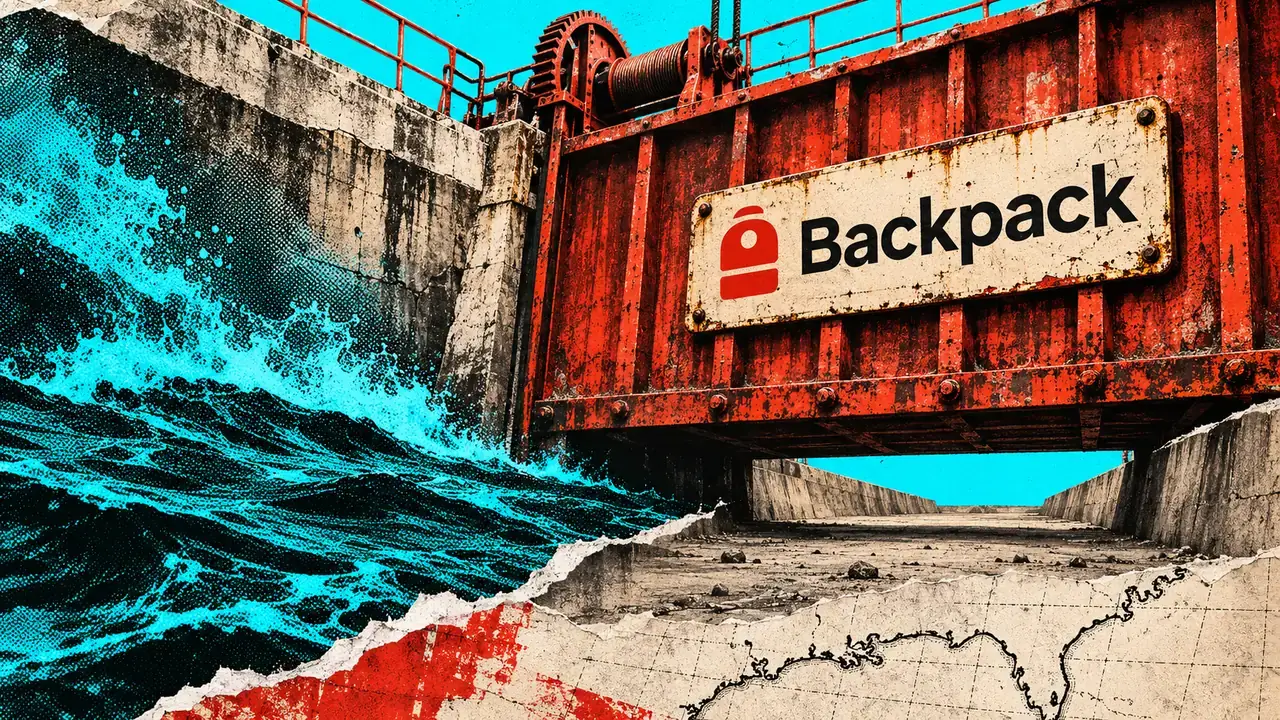
We have spent years watching the same pattern in crypto: American traders want access to high-leverage perpetuals and futures, but the regulatory wall at the border forces them into the arms of offshore platforms. It is a fragmented, often risky ecosystem where liquidity stays in the shadows. But the recent news surrounding Backpack and its regulatory moves with the CFTC suggests that the wall might finally be developing some cracks.
The Offshore Monopoly is Fragile
For a long time, the narrative was that US regulations were too stiff to allow a competitive derivatives market to flourish. Exchanges like Binance and Bybit dominated because they played by different rules, offering products that the CFTC simply wouldn't touch. This created a massive drain of capital from the US economy into offshore entities. It also left American retail and institutional builders in a tough spot—forced to either sit on the sidelines or navigate a legal grey area.
Backpack is taking a different route. By securing a US exchange and clearinghouse license through the CFTC, they are building a bridge where most only saw a moat. This isn't just about another app on your phone; it is about the plumbing of the industry. If you control the clearing route, you control the flow of capital. The significance of this can't be overstated because it challenges the notion that futures trading must happen in a regulatory vacuum to be profitable.
What This Means for the Builders
If you are building in the DeFi or fintech space, this move changes your roadmap. For years, the default assumption was that any sophisticated trading product had to be geofenced away from US users. We are now entering an era where the "regulatory moat" is becoming a competitive advantage. If a platform can offer the same capital efficiency as an offshore exchange but with the legal protections of a US-regulated entity, the choice for serious investors becomes obvious.
- Increased Trust: Builders can integrate with platforms that won't disappear overnight due to an enforcement action.
- Deep Liquidity: Bringing US institutional capital back into the futures market could lead to tighter spreads and better execution.
- Simplified Compliance: Using a domestic clearing route removes the headache of managing cross-border regulatory risks.
We have seen plenty of "compliant" exchanges fail because they were boring. They lacked the features, the speed, or the leverage that traders actually wanted. The challenge for Backpack isn't just getting the license—it is building a product that doesn't feel like a compromise. A regulated exchange that feels like a decentralized one is the holy grail for founders in this space.
The Clearinghouse Factor
The most important part of this story isn't the exchange itself; it is the clearing route. Most people ignore the back-end infrastructure, but that is where the real power lies. By establishing a regulated path for clearing, Backpack is essentially providing a blueprint for how crypto can integrate with traditional finance without losing its soul. It allows for a level of transparency that offshore exchanges have historically avoided.
The future of crypto trading in the US isn't about avoiding the CFTC; it is about building infrastructure so solid that the CFTC has no choice but to let it run.
I have always been a bit skeptical of the "crypto will replace everything" crowd. I prefer to look at how crypto can fix the broken parts of our existing systems. The current offshore model is broken because it relies on a lack of oversight as a feature. But oversight doesn't have to mean stagnation. If Backpack can prove that a regulated entity can handle the high-velocity world of crypto futures, the offshore grip will start to slip.
A Founder's Perspective on Regulation
As a founder, I look at regulation as a tax on innovation. But there comes a point where the cost of avoiding the tax is higher than the tax itself. We are reaching that tipping point. The friction of moving money in and out of offshore exchanges is becoming a burden for builders who want to scale. A US-based, regulated alternative reduces that friction. It allows you to focus on the product rather than the legal defense fund.
However, we shouldn't get ahead of ourselves. The launch terms for these new routes will be the deciding factor. If the restrictions are too tight—if the leverage is capped at 2x or if the onboarding process takes weeks—then the offshore giants have nothing to worry about. The success of this move depends entirely on the execution of the user experience. You can have all the licenses in the world, but if your platform is a ghost town, it doesn't matter.
The Long Game
The offshore exchanges aren't going to roll over. They have massive war chests and even bigger user bases. But they are also facing increasing pressure from global regulators. The days of the "wild west" are ending, whether we like it or not. The winners of the next cycle will be the ones who saw this coming and built the necessary bridges early.
For the average builder, the takeaway is clear: watch the infrastructure. Don't just look at the tokens or the hype. Look at who is building the rails. If Backpack succeeds in siphoning even a fraction of the offshore volume into a US-regulated environment, it will be the most significant shift in market structure we have seen in years.
We are moving away from a world where you have to choose between safety and utility. The goal is to have both. It is a slow process, and there will be plenty of setbacks, but the direction of travel is clear. The US is finally getting serious about crypto derivatives, and that is a net positive for anyone building for the long term.
Read the original at CryptoSlate →