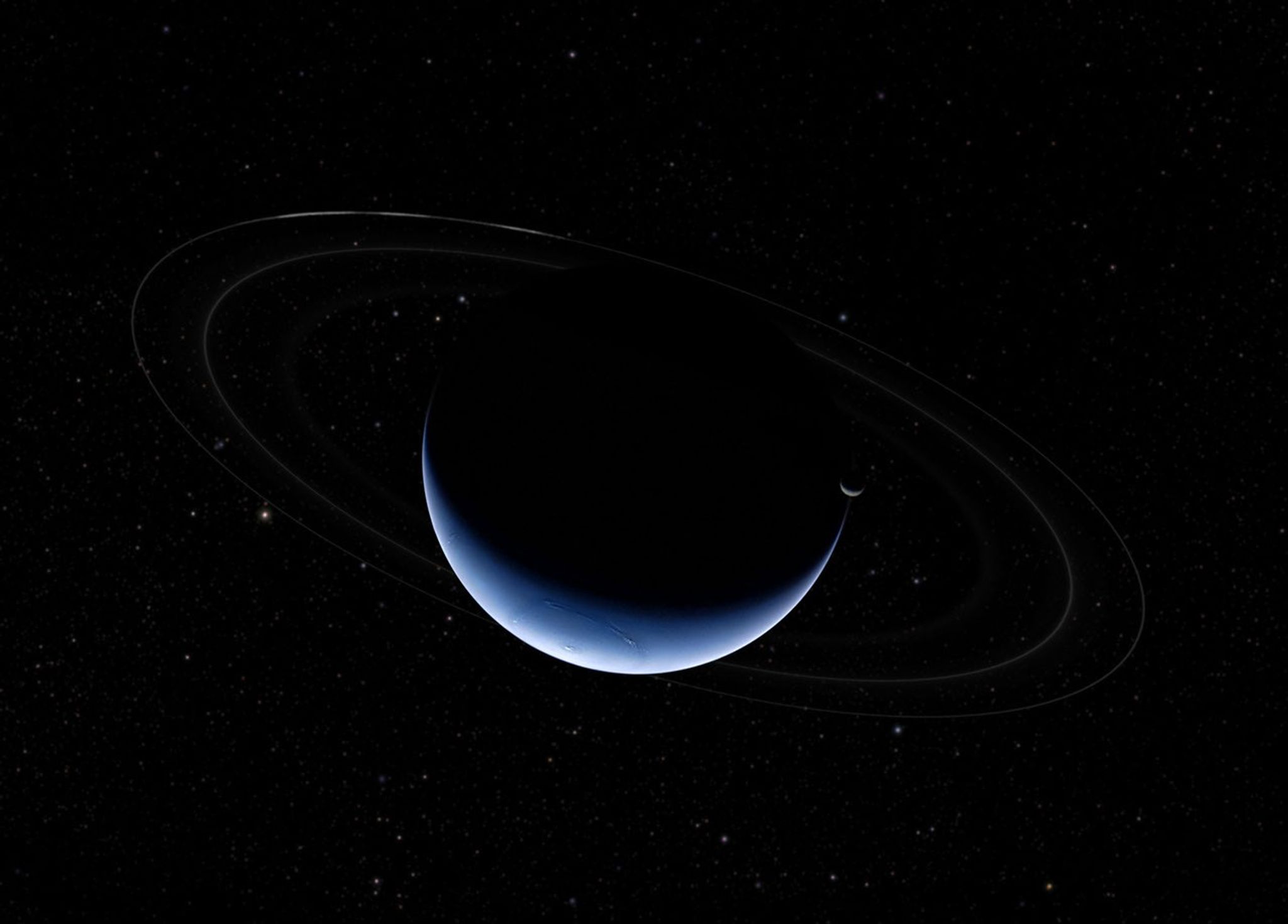
When NASA shared the imagery from Voyager 2’s encounter with Neptune, it wasn’t just a win for space science. It was a masterclass in long-term engineering. We are looking at data gathered by a machine launched in the late 70s, powered by hardware that would make a modern calculator look like a supercomputer. For those of us building in the crypto and AI sectors, there is a massive lesson here about durability versus hype.
The Architecture of Longevity
Neptune is a cold, dark, and distant giant. By the time Voyager 2 reached it, the probe was nearly three billion miles from home. The signal strength was incredibly weak. To get these images back, NASA engineers had to remotely reprogram the spacecraft's computers mid-flight to handle longer exposure times and better data compression. They were patching production code on a mission-critical system flying through deep space with no room for a reboot.
In the current builder landscape, we see a lot of "move fast and break things." We see protocols launched with half-baked security and AI models released with no thought toward sustainable compute costs. Voyager represents the opposite philosophy: build it to last fifty years, not five months. If you want to build something that survives the equivalent of a deep-space winter—like a multi-year bear market—you have to prioritize the core architecture over the flashy front-end features.
Solving for Extreme Constraints
Building for Neptune meant solving for constraints that most founders today would find stifling. The data transfer rate from Neptune was painfully slow. Every bit mattered. This forced a level of efficiency that we’ve largely lost in an era of cheap cloud storage and infinite bandwidth.
As builders, we should be looking at our stacks through this same lens. Are we over-engineering solutions because we have the resources to be lazy? Or are we building lean, resilient systems that can function when the environment gets hostile? In crypto, hostility comes from regulatory shifts or liquidity drains. In AI, it comes from hardware shortages or data silos. The Voyager team didn't have the luxury of scaling horizontally; they had to make what they had work perfectly.
The Signal Through the Noise
The images of Neptune show a vibrant, blue world with high-altitude clouds and a massive storm system known as the Great Dark Spot. It took years of travel through a void to get that clarity. Most founders quit when they hit the void—that middle period where the initial excitement has worn off, the funding is steady but not overflowing, and the finish line is still years away.
Voyager’s journey to the outer planets was mostly silence. It was years of routine maintenance and trajectory corrections. Success in tech usually looks like this. It is a long, often boring slog punctuated by brief moments of incredible discovery. If you aren't prepared for the silence between the planets, you probably shouldn't be a founder.
Why This Matters for AI and Web3
We are currently seeing a massive intersection between decentralized infrastructure and artificial intelligence. People are trying to build the "permanent web" or "autonomous agents." But look at the lifespan of the average project in our space. Most don't last four years, let alone the decades Voyager has clocked.
If we want to build a decentralized intelligence layer for the planet, we have to stop thinking in quarterly cycles. We need to think about data persistence, hardware decay, and protocol governance that can outlive the original founding team. Voyager 2 is still talking to us because its creators built it with a sense of stewardship, not just an exit strategy.
The Engineering Mindset
The Voyager mission succeeded because the team anticipated what could go wrong and built redundancies for it. In the world of smart contracts, we call this auditing and formal verification. In AI, it's alignment and safety. But too often, these are treated as afterthoughts—checkboxes to satisfy VCs rather than core pillars of the build.
When you look at the blue marble of Neptune, remember that the image exists because a group of people decided to build something that could survive the most extreme environment known to man. They didn't have a pivot plan. They didn't have a plan B if the hardware failed. They just built it right the first time.
The Takeaway for Builders
My advice to anyone currently in the trenches of a build is to look at your roadmap and ask yourself: "Is this built for a flyby, or is it built for the mission?" It’s easy to capture a moment of attention. It’s much harder to maintain a signal across three billion miles of space.
Stop chasing the latest trend in LLM wrappers or the newest high-yield farm. Those are the asteroids in the belt—they're everywhere, and they're mostly noise. Aim for the outer planets. Build the infrastructure that people will still be using, and still be learning from, forty years from now. The tools we have today are infinitely more powerful than what the Voyager team had in 1977. We have no excuse for building fragile things.
The most valuable systems are the ones that keep working when everyone has stopped looking at them.
Neptune is still there, spinning in the dark. Voyager 2 is still out there, heading into interstellar space. Your code should have that same level of stubborn persistence. Build for the long haul, or don't bother building at all.
Read the original at NASA Breaking News →