The Era of Autonomy
For a long time, we have been told that AI is an assistant. It was a co-pilot, a pair programmer, or a glorified search engine that saved you a trip to Stack Overflow. But the goalposts are shifting. Anthropic recently introduced a feature called Claude Ship, and it marks a turning point in how we think about the software development lifecycle. We are moving from AI-assisted coding to AI-managed deployment.
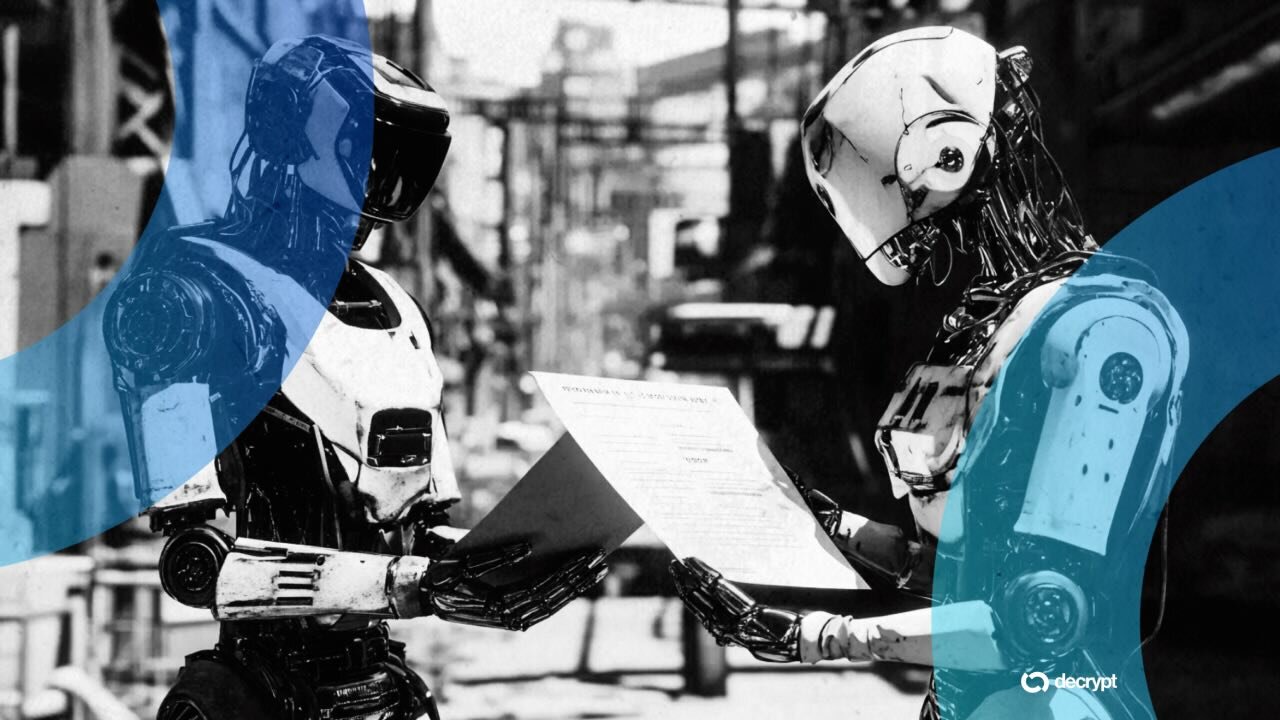
The premise is simple but heavy with implication: Claude can now write code, review that code, and then approve its own changes for release. This is not just about generating a snippet of Python. It is about the AI owning the workflow from the keyboard to the production environment. For builders, this is both a massive efficiency gain and a potential nightmare for quality control if handled poorly.
Closing the Loop
In a standard engineering team, the feedback loop is the bottleneck. A developer writes code, submits a pull request, waits for a peer to find time for a review, addresses comments, and finally merges. This process exists for a reason—human error is a constant. Anthropic is betting that Claude 3.5 Sonnet is now capable enough to play both roles in that exchange.
By allowing the model to review and repair its own software changes, Anthropic is trying to solve the problem of context switching. If a human has to step in every five minutes to check if the AI made a syntax error, the speed advantage of using AI disappears. When the model can self-correct, the developer moves up the stack to become a system architect rather than a debugger.
Why This Matters for Founders
If you are running a lean startup, your biggest cost is engineering time. Most founders I talk to are looking for ways to ship faster without doubling their burn rate. Tools like Ship are designed to bridge that gap. However, the skepticism starts when we talk about "approval."
Entrusting a model to approve its own work sounds like letting a student grade their own exam. In a production environment, a mistake isn't just a red mark on a paper; it is a service outage or a security vulnerability. Anthropic is leaving the guardrails up to the teams, allowing them to decide exactly when a human needs to intervene. This "human-in-the-loop" toggle is the most important part of the announcement.
The Risks of Automated Consensus
We need to be honest about the limitations of current LLMs. They are excellent at pattern matching but often lack a deep understanding of system-wide side effects. When an AI reviews its own code, it is essentially checking if the code matches its own internal logic. If the initial logic was flawed or biased toward a specific implementation, the review process might just reinforce the error.
As builders, we have to ask if we are creating a feedback loop where the AI is simply telling itself that it did a good job. This is where the role of the Senior Engineer changes. The job is no longer about checking semicolons; it is about verifying the intent of the system and ensuring the AI hasn't hallucinated a dependency that doesn't exist.
- Speed vs. Safety: How much of your codebase are you willing to automate before you lose a handle on how it actually works?
- Technical Debt: AI-generated code is notoriously verbose. If the AI is reviewing itself, is it optimizing for maintainability or just for execution?
- Ownership: When an autonomous deploy breaks the site at 3 AM, who is responsible? The developer who turned on the feature or the model?
The Cultural Shift in Engineering
We are seeing the death of the "coder" and the birth of the "operator." If tools like Claude Ship become the standard, the barrier to entry for building a functional product will drop to near zero. This is great for competition but creates a noise problem. When anyone can ship a hundred features a day, the value shifts from the features themselves to the quality of the user experience and the reliability of the underlying system.
I have seen plenty of tools promise to automate the boring parts of dev work, but this feels different because it targets the decision-making process. Reviewing and approving code is an act of judgment. By delegating that judgment to an algorithm, we are testing the limits of how much we trust these models.
The Pragmatic Path Forward
Don't just turn it on and walk away. The smartest way to use a tool like this is to treat the AI as a junior dev who never sleeps. Let it handle the boilerplate, the migrations, and the unit tests. Let it suggest reviews. But for the core business logic—the stuff that actually moves the needle for your users—keep a human eyes-on approach.
The goal should be to reduce the "to-do" list, not to eliminate the engineer. If you use Claude Ship to automate the 80% of work that is repetitive, you free up your best people to solve the 20% of problems that are actually hard. That is where the real value lies.
Final Takeaway
Anthropic is pushing a future where software builds itself. It is a powerful vision, but it requires a high level of maturity from the teams using it. The tool is now available to help you ship faster than ever, but the responsibility for what you ship remains entirely yours. Don't let the speed of the tool blind you to the necessity of oversight. Use the autonomy to scale, but keep your hands on the steering wheel.
Read the original at Decrypt →