The Allure of the Auto-Architect
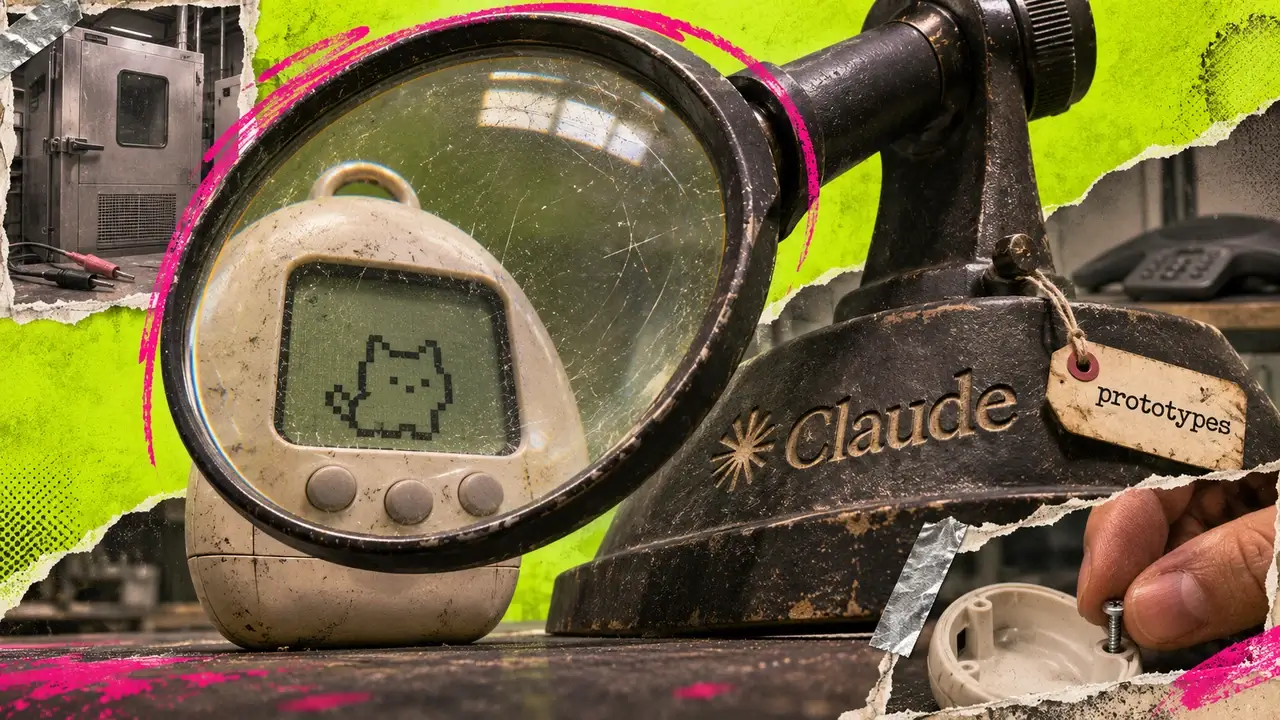
I have spent a decade watching software developers get excited about the prospect of never having to touch a compiler. Now, we are seeing the same fever dream hit the hardware world. Recent experiments with Anthropic’s Claude model show it can now spit out blueprints for custom gadgets. Diode engineers actually took these designs, built them, and confirmed they functioned. On the surface, it looks like a miracle for the barrier to entry. If an LLM can handle the boring math of circuit layout and housing tolerances, anyone with an idea becomes a founder.
P
But there is a massive difference between a one-off success and a repeatable business. As someone who looks at these tools from a builder-first perspective, I see a dangerous seductive quality to these AI-generated blueprints. We are currently in the "demo" phase of AI hardware design, and for those of us in the trenches, the demo is usually the easiest part to fake.
Bridging the Gap from Code to Copper
The core of the recent buzz revolves around Claude’s ability to understand the physics and spatial requirements of hardware components. Usually, designing a gadget involves months of CAD work, thermal testing, and electrical engineering validation. Anthropic’s model shortcuts this by predicting what a functional design should look like based on its training data. The engineers at Diode proved that for basic devices, the model can indeed produce a schematic that doesn't explode when you flip the switch.
For a founder, this is tempting because hardware is notoriously expensive. We call it "hard"-ware for a reason. Prototyping costs are usually the graveyard of great ideas. If you can use an LLM to shave six months off your R&D cycle, your burn rate drops and your runway extends. That is the bull case. The reality is that a blueprint is just a suggestion until it survives a stress test. Claude might give you a layout that works once in a controlled environment, but it does not yet understand the nuance of component sourcing, lead times, or the subtle variations in material science that happen at scale.
The Ghost in the Machine: Consistency
The biggest hurdle mentioned in the recent reports—and the one that should make every CTO pause—is the lack of consistency. If you ask an LLM to design a power management board today, you get one result. Ask it tomorrow, and you might get something slightly different. In the world of software, we call this "hallucination." In the world of hardware, we call it a "recall."
Hardware builders rely on repeatability. If I am shipping ten thousand units of a crypto-mining rig or an AI-wearable, I need to know that every single board follows a verified logic. Currently, AI design processes are a bit of a black box. We can see the output, but the "why" behind specific component choices is often obscured. This makes certification—the boring stuff like FCC or CE compliance—a nightmare. You cannot tell a regulatory body that your gadget is safe because an LLM said so. You need a paper trail of engineering decisions that a human can defend.
What This Means for Crypto and AI Founders
For builders in the decentralized hardware space (DePIN), this technology is a double-edged sword. We are seeing a surge in projects that require custom sensors or node hardware. The ability to iterate quickly using Claude or similar models is a massive win for the prototyping phase. It allows a small team to act like a much larger engineering firm. It levels the playing field against incumbents who have massive internal R&D departments.
However, the skepticism comes in when you move toward the "production" button. Relying on an AI to generate your hardware stack without deep human oversight is asking for a catastrophic failure. I have seen too many founders think they can skip the boring parts of engineering because a tool makes it look easy. The real opportunity here isn't in letting the AI be the lead architect, but in using it as a high-speed drafting assistant. It can catch simple errors or suggest more efficient paths, but it shouldn't be signing off on the final bill of materials.
The Certification Roadblock
Let's talk about the elephant in the room: liability. When a human engineer signs off on a blueprint, there is a chain of accountability. If the device fails or causes harm, there is an established framework for addressing that failure. With AI-generated blueprints, that chain is broken. Anthropic isn't going to bail you out if your gadget catches fire because of a poorly placed capacitor that the model thought looked "mathematically probable."
- Reliability: LLMs are probabilistic, not deterministic. Hardware needs to be deterministic.
- Traceability: You need to know where every design choice came from to pass industrial standards.
- Sustainability: Designing a product is easy; designing a product that can be manufactured at a reasonable cost for five years is hard.
The Takeaway for Builders
The progress Claude has made in hardware design is impressive, but it is not a replacement for an engineering team. It is a powerful new tool in the kit. If you are building a startup, use these models to mock up ideas and run "what if" scenarios. Use them to translate your vision into something a human engineer can refine. But do not mistake a fast blueprint for a finished product.
The value in the coming years won't be in the AI that can draw a circuit; it will be in the platform that can verify that circuit against real-world physics and manufacturing constraints. Until we solve the consistency problem, the "AI-designed gadget" is mostly a vanity metric for the tech press. Real builders know that the magic happens in the 10% of the work that the AI can't yet see—the edge cases, the supply chain hiccups, and the stubborn laws of thermodynamics.
Keep your prototypes fast and your production slow. The AI is a sprint tool, but hardware is always a marathon.
Read the original at CryptoSlate →