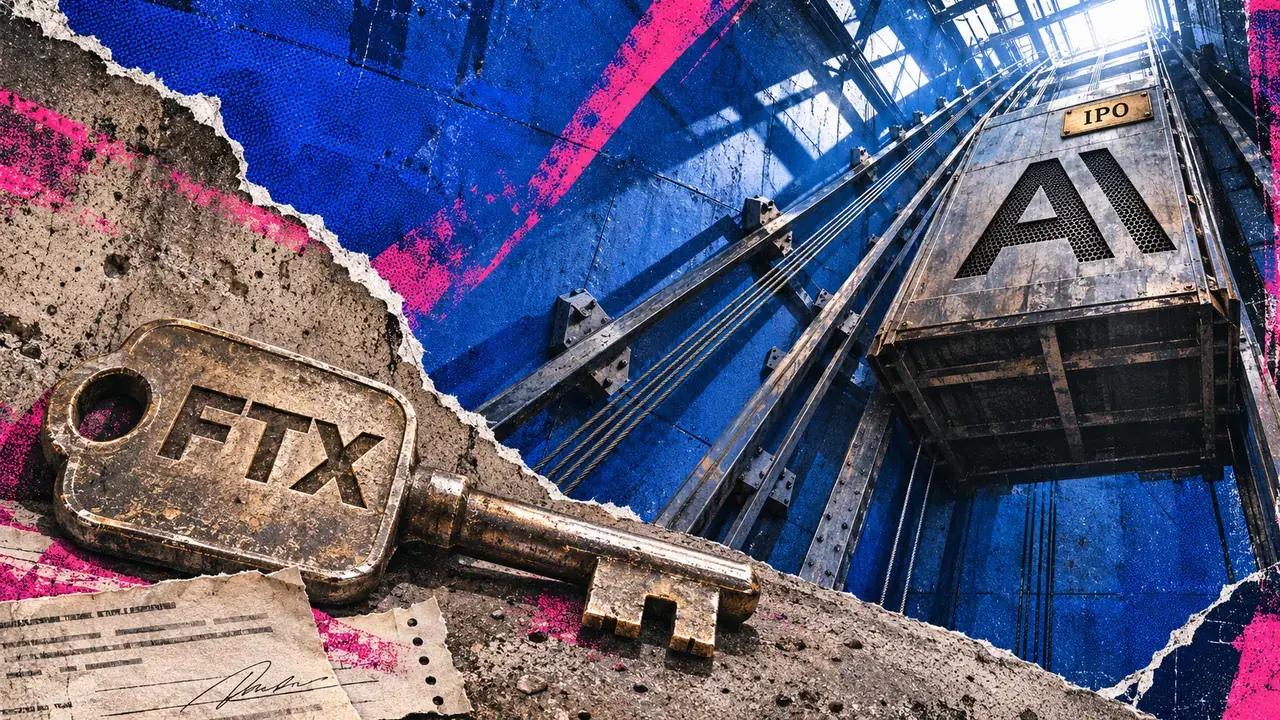
Timing in this industry isn't just about catching the bottom or selling the top. Sometimes, it is about having the luxury of staying in the game long enough for your bets to mature. The recent public debut of Anthropic, the AI heavyweight that just hit the markets, serves as a masterclass in the cost of forced liquidations and the sheer magnitude of what could have been for the FTX estate.
The Forty-Billion-Dollar Gap
When the FTX collapse happened, the bankruptcy administrators were tasked with one primary goal: recover as much liquidity as possible to pay back creditors. One of the crown jewels in Sam Bankman-Fried’s original portfolio was a significant stake in Anthropic, an AI safety and research company that has since become a primary rival to OpenAI. At the time of the bankruptcy proceedings, the estate managed to offload these shares for approximately $2 billion.
Fast forward to the Nov. 19 IPO, where Anthropic’s valuation skyrocketed. That same stake, had it been held until the public listing, would now be worth north of $40 billion. We are looking at a 20x delta that evaporated because the administrators had to hit the ‘sell’ button during a fire sale. For the builders and investors watching from the sidelines, this isn’t just a piece of trivia about a bad trade; it’s a sobering look at how the machinery of bankruptcy interacts with high-growth technology cycles.
The AI Hype Meets Crypto Reality
It is easy to blame the administrators for selling too early. In hindsight, every decision looks flawed when you compare it to a vertical chart. But bankruptcy law doesn’t care about ‘HODLing.’ It cares about settling debts. The tragedy here for the victims of FTX is that the very asset class Bankman-Fried was betting on—Generative AI—was on the verge of its most explosive growth phase exactly when the crypto exchange was imploding.
For builders, this highlights a massive disconnect. We often see crypto and AI as two sides of the same coin in the ‘frontier tech’ category, but their market cycles move at different speeds. While crypto was reeling from the post-FTX contagion and regulatory scrutiny, AI was entering a capital-intensive arms race. Anthropic didn’t just grow; it became a foundational piece of the global tech stack. The $40 billion missed windfall represents the premium of patience—a patience that bankrupt entities simply cannot afford.
What This Means for the Builders
If you are building in the crypto space today, you need to look at this $40 billion gap as a warning about liquidity and leverage. The reason these shares were sold for $2 billion wasn’t because the buyers were geniuses; it was because the seller was desperate. When you are forced to sell, you are no longer a market participant; you are a victim of the bid.
I talk to a lot of founders who are trying to bridge the gap between AI and blockchain. The lesson from the Anthropic/FTX saga is that the underlying value of your technology can be completely erased by the failures of your financial infrastructure. Bankman-Fried’s investment in Anthropic was, objectively, one of the greatest venture bets in history. But because the foundation it sat upon was built on sand, the gains never made it to the people who actually deserved them.
The Opportunity Cost of Failure
We often talk about the direct losses of the FTX collapse—the missing user funds, the stolen deposits, the evaporated tokens. But the opportunity cost is arguably higher. That $40 billion could have potentially made every single creditor whole with room to spare, perhaps even changing the entire narrative of the recovery process.
Instead, that value has been captured by the private equity firms and institutional players who bought the stake from the estate at a massive discount. This is how wealth transfers happen in the wake of a collapse. The ‘vulture’ investors didn’t do anything illegal; they simply provided liquidity when the market was desperate for it. They bought the future for pennies on the dollar because the current owners couldn’t afford to wait for it to arrive.
Founders: Diversify Your Risk
- Don't tie your treasury to a single point of failure. Even the best investments can't save a broken business model.
- Understand the liquidity of your holdings. A $40 billion paper gain is worth zero if you are forced to exit at $2 billion to pay the bills.
- AI and Crypto are complementary, but distinct. Don't assume the market will value them the same way during a crisis.
The Skeptical Takeaway
Let’s be honest: the $40 billion figure is a ghost. It doesn’t exist for the FTX creditors, and it never will. While headlines will focus on the ‘missed fortune,’ the real story is about the fragility of the entire ecosystem. We are playing a high-stakes game where the winners are often just those who have the longest runway.
For those of us still building, the goal shouldn’t be to find the next Anthropic. The goal should be to build businesses that don’t require a $40 billion miracle to survive. The Anthropic IPO is a victory for AI, but for the crypto industry, it is a lingering reminder of a self-inflicted wound that continues to bleed value long after the initial trauma.
The biggest risk in tech isn't being wrong about the future; it's being right about the future but being too broke to wait for it to happen.
We need to stop celebrating ‘visionary’ bets when they are made with other people’s money. The Anthropic windfall should have been a win for the entire crypto space. Instead, it’s just another line item in a bankruptcy filing, proving once again that in this industry, survival is the only metric that truly matters.
Read the original at CryptoSlate →