I have spent years watching the hype cycles of both crypto and AI, and if there is one thing that usually signals a shift in the landscape, it is when the biggest builders in the space start sounding like doomsday preppers. Anthropic, the team behind Claude, just dropped a warning that should make every software architect take a long look at their security stack.
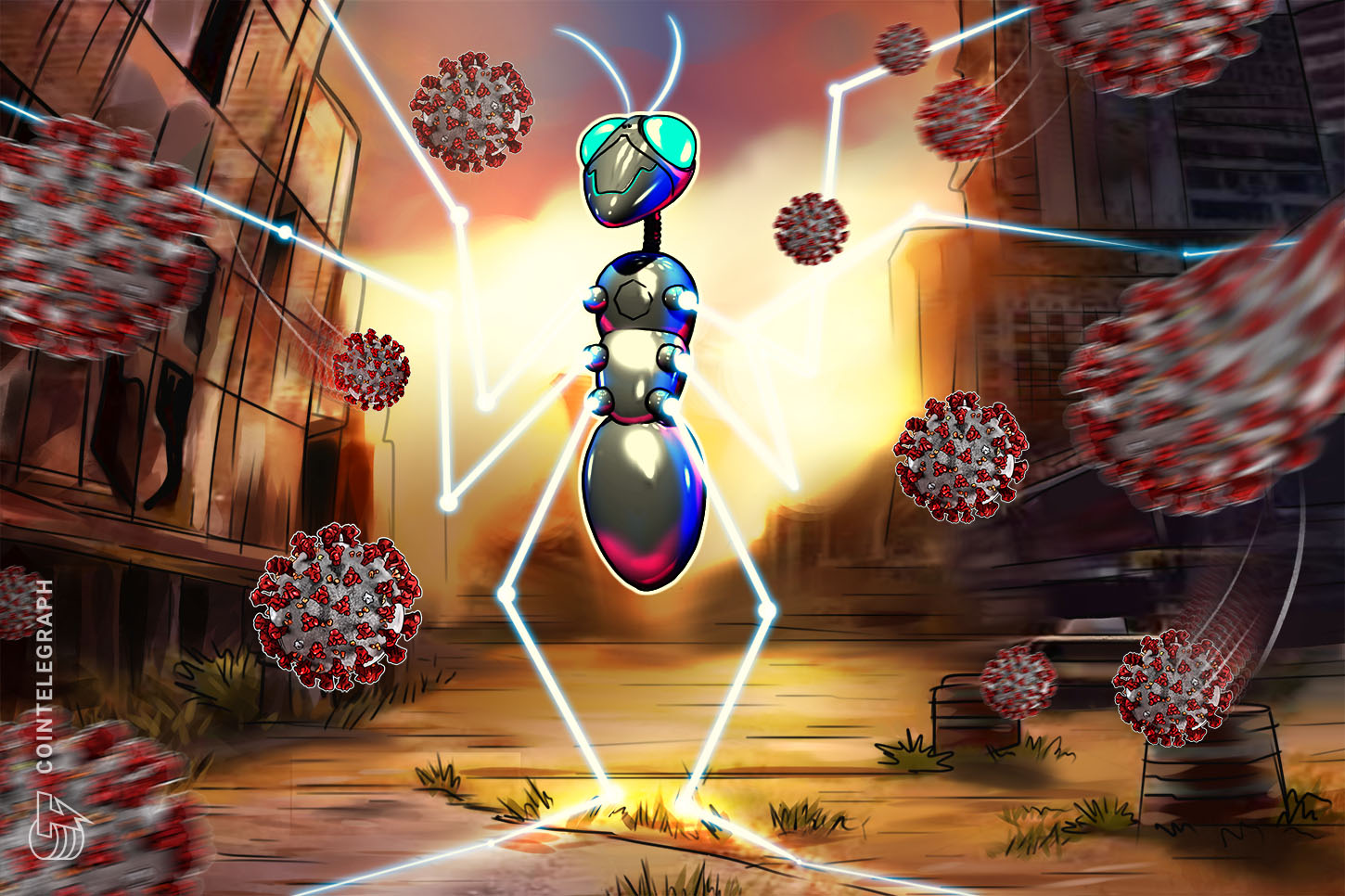
We are talking about AI worms. Not the kind of script kiddie malware we saw in the early 2000s, but autonomous agents that can hop from one device to another, replicating themselves without any human hitting a 'send' button. According to Anthropic, we are likely only months away from this becoming a functional reality.
The Evolution of the Digital Parasite
In the old days, a virus needed you to be a little bit careless. You had to click a suspicious link in an email or plug in a random thumb drive you found in the parking lot. The virus was a static piece of code. It did one thing, and it did it until an antivirus program recognized its signature and shut it down.
AI worms change the math entirely. These are models trained to navigate systems, find vulnerabilities, and pivot. Because they are powered by large language models (LLMs), they do not just follow a rigid script. They can adapt. If they hit a firewall, they can try to reason their way around it. If they find a new type of device on a network, they can analyze its protocol in real-time to figure out how to infect it.
Anthropic is pointing out that our current push for 'agentic' AI—where we give models the power to browse the web, send emails, and control our smart homes—is effectively building the highway these worms will travel on.
Why Builders Should Be Worried
If you are building a startup right now, you are likely trying to integrate AI agents to handle customer support, automate your DevOps, or manage your smart office hardware. We are all rushing toward autonomy because it scales. But we are also creating a massive, interconnected surface area for attack.
The threat here is not just that a worm steals your data. It is that the worm becomes a permanent resident of your infrastructure. Imagine a piece of code that lives in your smart thermostat, uses your local Wi-Fi to scan your laptop, finds a way into your company's Slack, and then uses your own identity to send malicious prompts to your team's internal AI tools. It is a chain reaction that moves at the speed of compute, not the speed of human interaction.
The End of the Perimeter
For decades, cybersecurity was about building a wall around your network. We called it the perimeter. Once you were inside the VPN, you were trusted. AI worms render that model obsolete. Because these agents can mimic human behavior and use legitimate tools to spread, there is no clear boundary between a 'safe' internal action and an external attack.
For founders, this means the 'move fast and break things' era of AI integration needs a serious reality check. If you are building an app that gives an LLM access to write to your database or send outbound communications, you are essentially leaving the door unlocked for an autonomous guest.
The Regulatory and Ethical Gap
Anthropic’s warning is not just a technical heads-up; it is a signal that the industry is not ready. Most of our current AI safety discussions revolve around 'alignment'—making sure the AI doesn't say something offensive or give someone instructions on how to build a bomb. That is important, but it is a narrow view of safety.
We are not talking enough about 'containment.' How do you stop a model that has been weaponized by a bad actor from jumping from a server in Virginia to a smart fridge in London? The decentralized nature of the internet makes this an almost impossible problem to solve with traditional regulation. You cannot 'sue' a self-replicating worm, and by the time you identify the source, the code has already evolved three generations past its original state.
A Founder’s Perspective: What to Do Now
I am not a fan of fear-mongering for the sake of clicks, but I am a fan of being prepared. If you are a builder, you need to start thinking about 'Zero Trust' architecture as a non-negotiable requirement for any AI-integrated product.
- Limit Agency: Do not give your AI agents more permissions than they absolutely need. If an agent is meant to summarize emails, it should not have the permission to install software or change network settings.
- Sandboxing is Mandatory: Any autonomous process should run in an isolated environment where it cannot see or talk to the rest of your system unless specifically permitted.
- Human-in-the-loop for High-Stakes Actions: We all want full automation, but for now, any action that involves moving funds, changing security protocols, or bulk data exports should still require a human thumbprint.
Anthropic is right to be worried. We are giving these models the keys to the kingdom before we have even checked if the locks work. The next few months will be a race between the people building these autonomous agents and the people trying to figure out how to keep them from turning the internet into a giant, self-replicating botnet.
The biggest risk isn't that AI becomes sentient; it's that we give non-sentient, highly efficient tools the ability to propagate themselves across our fragile infrastructure without a kill switch.
We are entering a phase where the 'intelligence' of our tools is becoming a double-edged sword. As builders, our job is to make sure we aren't handing the sharp end to the wrong people—or letting it move on its own.
Read the original at Cointelegraph →