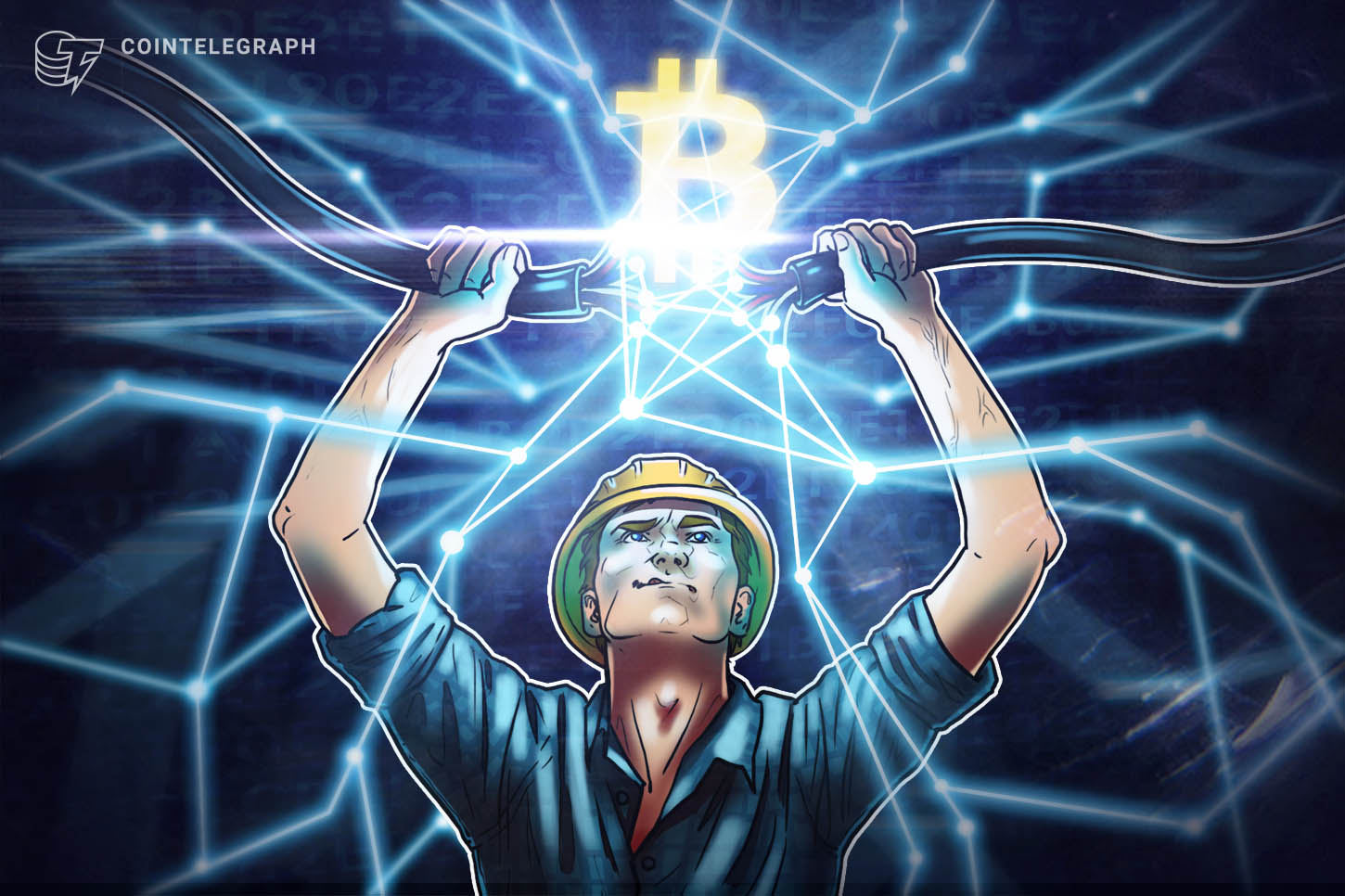
The Great Power Grab
For the last decade, Bitcoin miners have been the pariahs of the energy world. They were accused of boiling oceans, straining aging grids, and hoarding electricity for what critics called digital nothingness. But lately, the narrative has flipped. The explosion of generative AI has created a desperate, almost feral demand for power, and suddenly, the miners are the ones holding the golden tickets.
Large-scale data centers for AI require two things that are currently in very short supply: massive amounts of electricity and the physical infrastructure to handle it. While big tech firms like Microsoft and Google have plenty of cash, they are running into a multi-year bottleneck. Getting a new grid connection for a high-density data center can take anywhere from four to seven years in the United States. In the fast-moving AI arms race, five years is an eternity. This is where the miners come in.
Landlords of the Grid
Bitcoin miners were early to the party. They spent years scouting locations with stranded energy, negotiating power purchase agreements, and building substations. Now, those assets are arguably more valuable than the Bitcoin being produced. We are seeing a shift where the value of a mining company is no longer tied strictly to its hash rate, but to its megawatts. If you have 200 megawatts of energized capacity, you aren't just a miner; you are a landlord to the future of computation.
This isn't just theory. We’ve seen major deals where AI companies are essentially leasing or buying out mining sites just to get their hands on the transformers and the grid access. For a miner, the math is starting to look very attractive. Scaling a Bitcoin operation depends on the volatile price of a single asset. Leasing that same infrastructure to a company training an LLM offers stable, long-term revenue that looks much better on a balance sheet if you’re trying to impress Wall Street.
The Difficulty Adjustment for Humans
As a founder, I’m always skeptical of the easy pivot. The headline says miners can just switch to AI, but the reality is much messier. Bitcoin mining is a rugged, relatively low-maintenance operation. ASIC miners are designed to hum away in what are essentially glorified sheds with massive fans. They don't mind a bit of dust, and they don't require high-tier cooling or redundant fiber-optic lines. If a miner goes down for ten minutes, you lose ten minutes of hashing. No big deal.
AI is a completely different beast. Training a model requires Tier 3 or Tier 4 data center standards. You need extreme redundancy, liquid cooling for the latest H100 chips, and massive amounts of bandwidth with ultra-low latency. You can’t just pull out a rack of Bitmain S21s, slide in a rack of Nvidia GPUs, and call it a day. The airflow requirements alone would require a total structural overhaul of most existing mining warehouses.
Furthermore, the human capital required is different. Managing a farm of ASICs is a mechanical job. Managing a multi-billion dollar AI cluster requires specialized cloud architects and systems engineers. Most mining companies aren't staffed for that. They are lean operations focused on energy arbitrage, not high-level devops.
The Hybrid Dilemma
Some companies are trying to walk both paths, keeping their Bitcoin machines running while carving out a corner for AI. On paper, it’s a great hedge. When BTC is up, you mine. when AI demand is high, you lease. But in practice, you end up doing both poorly. The power density of an AI rack is significantly higher than that of a Bitcoin rack. Trying to manage those two thermal profiles in the same building is a nightmare for HVAC engineers.
We also have to talk about the culture shift. Bitcoin is about decentralization and permissionless systems. AI, at least the kind being funded by big tech, is the definition of centralized, high-walled hardware. Miners who transition aren't just changing their hardware; they're changing their business model from being sovereign participants in a global network to becoming service providers for centralized tech giants.
The Builder’s Perspective
If you are building in this space, the opportunity isn't necessarily in the mining or the AI training itself, but in the glue that holds them together. There is a massive need for modular data center designs that can be deployed quickly on mining sites. Companies that can bridge the gap between a raw power site and an AI-ready facility in eighteen months instead of five years will dominate this decade.
We are also likely to see a consolidation. Small miners with 10 or 20 megawatts are probably too small for the AI giants to care about. But the mid-to-large cap public miners are effectively becoming energy infrastructure plays. I expect many of these companies to eventually drop the word Bitcoin from their titles entirely, rebranding as High-Performance Computing (HPC) providers.
What Happens to the Network?
There is a concern that this land rush for AI power will push Bitcoin mining off the grid or to less stable regions. If the profitable, stable power in the US and Canada is all sucked up by AI, miners will have to go back to hunting for the fringes—flared gas in North Dakota, hydro in Ethiopia, or geothermal in El Salvador. This isn't necessarily bad for Bitcoin; it actually forces the network to become more decentralized and seek out the energy that no one else wants.
However, it does mean the era of easy, industrial-scale Bitcoin mining in the West might be peaking. If you can sell a kilowatt-hour to a generative AI company for five times what you’d make mining Bitcoin, your fiduciary responsibility to shareholders makes the choice for you. The hash rate follows the profit, and right now, the profit is leaning toward the silicon that can think, not just the silicon that can guess hashes.
The Long Game
This power crunch is the ultimate validation of the infrastructure that miners have built over the last decade. They were the scouts who found the water in the desert. Now that a city wants to move in, the scouts are getting rich selling the rights to the well. That’s a classic founder success story, even if it means the original mission changes.
But don't mistake a real estate play for a tech revolution. Buying a transformer doesn't make you an AI company. It makes you a utility. For the builders out there, the real work is in making these two worlds compatible without losing the soul of either. We need more efficient cooling, better power management software, and a realistic understanding that an AI cluster is not just a high-tech space heater.
The takeaway for builders: Your most valuable asset isn't your code or your hash rate—it's your access to the physical world. In a world moving toward AI, power is the only true scarcity.
Read the original at Cointelegraph →