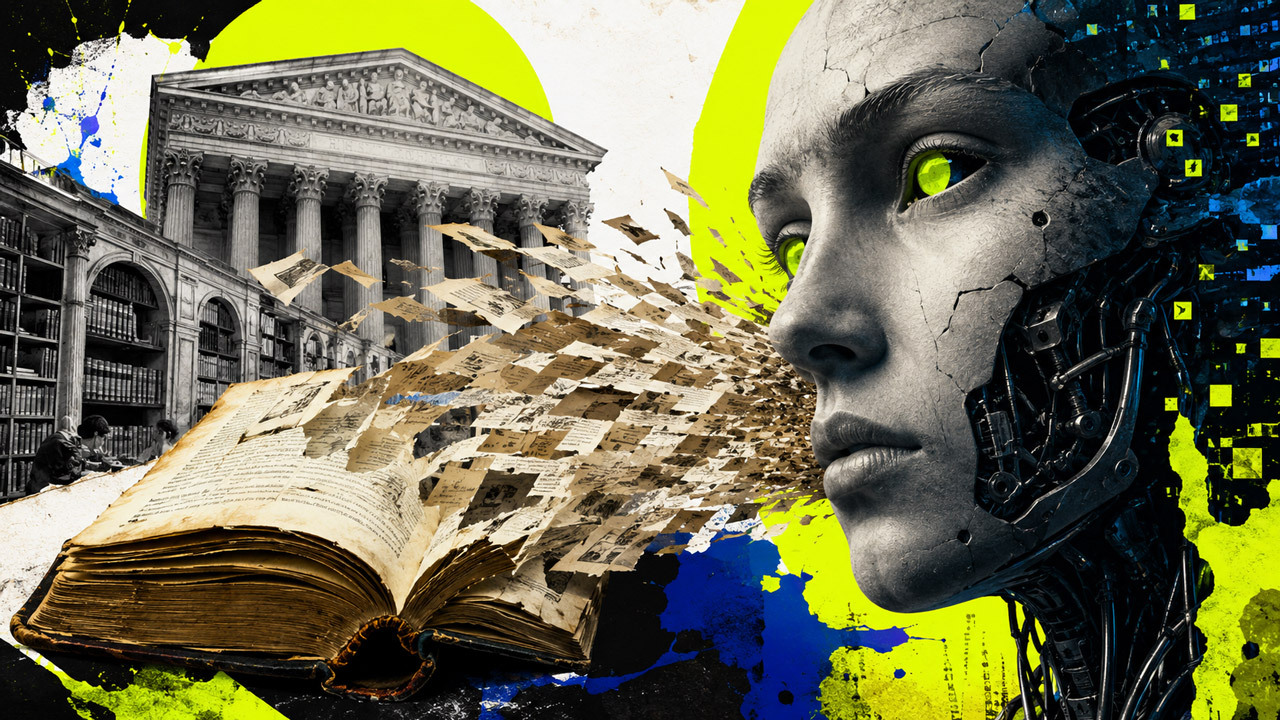
I have spent a lot of time in the weeds of the AI industry, talking to founders who are terrified that a single copyright ruling could wipe out their entire model weights. But we are seeing a weird, almost dystopian pivot in how these massive companies are sourcing their training data. It turns out that the most cutting-edge technology on the planet is currently being fueled by a behavior that feels like it belongs in the dark ages: buying physical books and literally shredding them.
The Digital vs. Physical Paradox
The core of the issue stems from recent legal interpretations, specifically some of the developments around the Anthropic case. The courts have been trying to figure out what constitutes 'fair use' when a machine ingests a billion words. Historically, if you buy a digital copy of a book, the license is incredibly restrictive. You cannot legally duplicate it a thousand times to feed various GPU nodes without triggering massive copyright alarms.
However, physical property rights are different. Under the 'First Sale Doctrine,' once you buy a physical book, you own that specific object. You can read it, you can sell it, and apparently, you can feed it into a high-speed scanner. Because the AI labs can prove they purchased a 1:1 replacement for the data they are consuming, they are finding a loophole that digital licensing simply doesn't offer. In the eyes of the law, replacing a digital file feels like piracy; replacing a physical copy feels like a transaction.
Why Builders Should Care
As builders, we are used to thinking that everything starts and ends with an API. We assume that if we need data, we scrape it or license it. But the 'physical-to-digital' pipeline represents a massive shift in how we value sources. If you are building a specialized LLM for niche technical industries or medical research, you might find that the highest quality data isn't on the open web—it's trapped in physical manuals and textbooks that haven't been digitized yet.
The fact that AI firms are willing to go through the manual, expensive labor of purchasing and destroying physical books tells you everything you need to know about the scarcity of high-quality, 'clean' data. We are hitting a wall where the internet is becoming an echo chamber of AI-generated content. To get original, human-thought-dense data, companies are going back to the source, even if it means getting their hands dirty.
The Practical Logistics of the Shred
When these firms shred libraries, they aren't just being dramatic. De-binding a book and scanning it page-by-page ensures the highest possible OCR accuracy. It removes the shadows of the spine and the distortion of the curve. For a builder, this is a lesson in data hygiene. High-quality output requires high-utility input. If you are training a model on low-quality PDFs you found on a forum, your model will reflect that garbage. The big players are spending millions on physical acquisition because quality is the only moat left.
This isn't just about avoiding a lawsuit; it's about the fact that physical media is currently a 'cleaner' legal and technical asset than its digital counterpart.
The Legal Arbitrage of Fair Use
The legal test for fair use often looks at whether the use 'supersedes' the original market. By buying a physical book for every 'instance' of training, AI companies argue they are supporting the market, not replacing it. It’s a clever bit of legal gymnastics. They are essentially saying, 'We didn't steal the content; we bought the paper it was printed on and just moved the information into a different format.'
For founders, this should be a wake-up call about regulatory risk. If your entire startup relies on 'scraping' without a clear strategy for how you will defend your data sourcing, you are building on sand. The giants are already pivoting to these expensive, physical-backed methods because they know the legal hammer is coming down on unauthorized digital scraping.
The Skeptic's View
Let's be real: this is incredibly wasteful. We are talking about destroying knowledge to create a digital approximation of that same knowledge. It feels backward. But in the world of venture-backed AI, efficiency of the law matters more than the efficiency of the environment. If shredding a thousand books costs $20,000 but saves $20 million in potential copyright settlements, a CFO will choose the shredder every single time.
As a founder, you have to ask yourself where you stand in this ecosystem. Are you going to be the one who finds a way to bridge this gap more ethically, or are you going to get caught in the middle of these shifting legal definitions? The 'physical preservation' of these works is currently being ignored by the legal tests, which focus only on the market value. The cultural value of the book itself is being treated as zero.
Takeaways for the AI Founder
- Data Sourcing is the new Silicon: The quality of your training set is not just a technical hurdle; it’s a legal one. Physical acquisition is a valid, if expensive, path for high-stakes models.
- Watch the First Sale Doctrine: Keep an eye on how courts handle the transition from physical ownership to digital derivative works. This will define the next five years of AI development.
- Don't rely on the 'Open' Web: The web is becoming polluted. The gold standard for data is increasingly moving toward proprietary and physical archives.
We are watching a weird collision between 15th-century technology—the printing press—and 21st-century neural networks. The fact that the smartest people in the room are buying up paper and ink just to destroy it tells you that our current copyright laws are broken. But for the savvy builder, it also shows you exactly where the most valuable data is hidden. It’s not in the cloud; it’s on a shelf somewhere, waiting to be ingested.
Read the original at CryptoSlate →