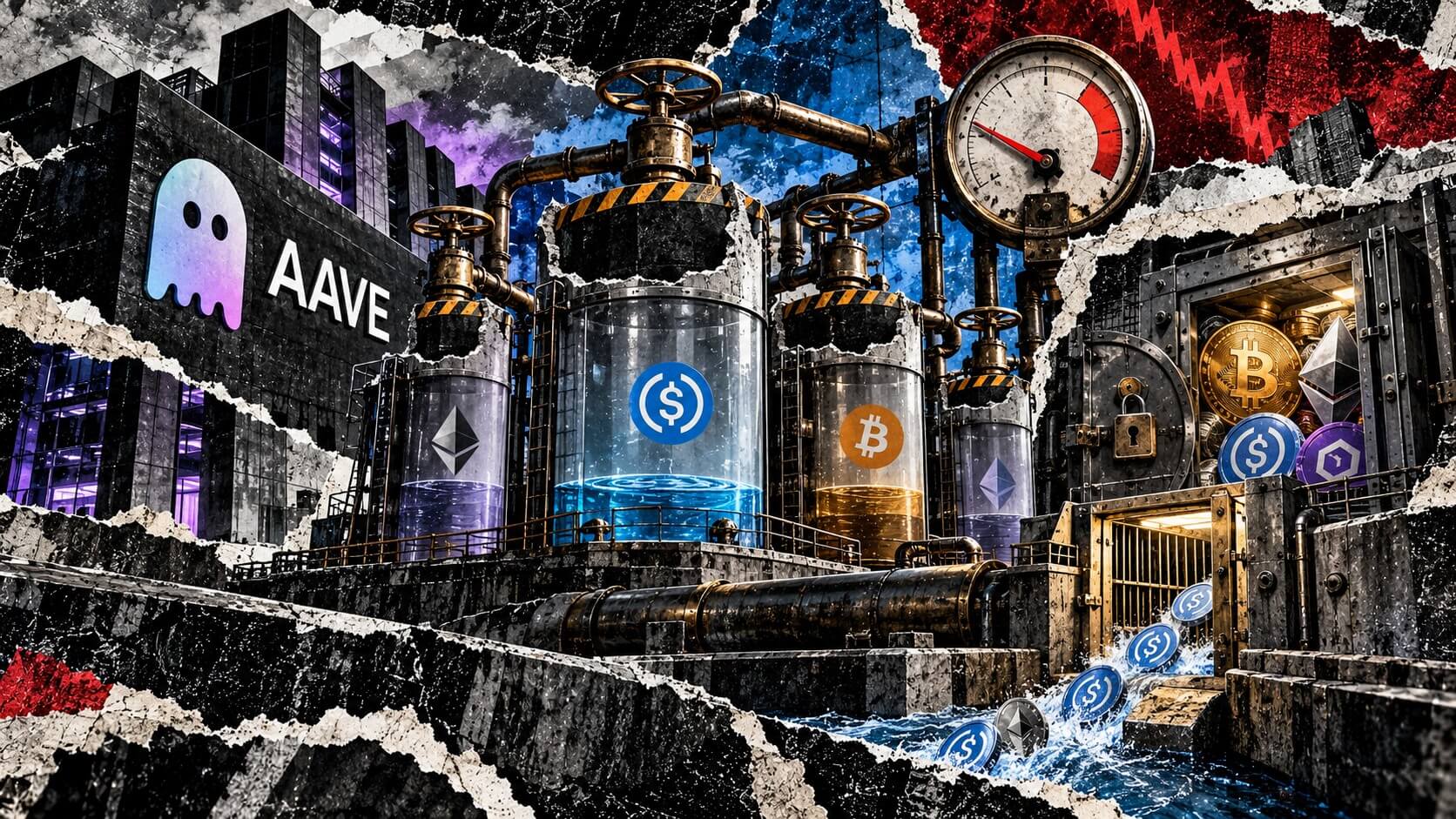
Aave is back online, but it is not business as usual. After a series of emergency freezes triggered by market turbulence, the protocol has officially reopened its affected markets. However, if you were expecting a return to the wide-open lending environment of last year, you are going to be disappointed. The new regime is defined by caution, capped collateral, and a clear signal that the guardrails are being bolted down.
The Emergency Response
Risk management in DeFi is often invisible until it becomes the only thing that matters. When LlamaRisk and other contributors flagged potential vulnerabilities during the latest market dip, the Aave DAO acted quickly to freeze specific pools. This was the right move for protocol safety, but it left a lot of users in a lurch, unable to adjust positions or withdraw capital in real-time.
The reopening process has been methodical. According to the latest governance updates, the emergency batches have been executed, which effectively thaws the markets. But there is a catch: just because a market is open does not mean it is functional for every type of strategy. The protocol is currently blocking new collateralized loans in several key areas to prevent a cascade of bad debt if volatility returns.
What Builders Need to Understand
For founders building on top of Aave or utilizing its liquidity for treasury management, this serves as a massive reality check. We talk a lot about permissionless finance, but "permissionless" does not mean "without risk controls." When the DAO decides a specific asset is too risky to serve as collateral, your entire automated strategy can break in an afternoon.
The current state of Aave suggests a shift toward a tiered liquidity model. We are moving away from the idea that any asset with a price feed can be used to mint debt. Instead, we are seeing the emergence of "isolated" markets where risks are siloed. If you are building a vault or a yield aggregator, you can no longer assume that the collateral parameters you see today will exist tomorrow.
The Liquidity Trap
One of the biggest issues with the recent freeze-and-thaw cycle is the practical access to liquidity. Even with markets reopened, the actual depth available for withdrawals is governed by strict utilization rules. If the pool is heavily utilized and the collateral rules are tightened, you might find yourself in a situation where you are technically allowed to withdraw, but the protocol lacks the idle assets to fulfill the request immediately.
This is where the skepticism comes in. We often market these protocols as being more efficient than banks, but when a bank runs out of cash, the government steps in. When a DeFi protocol hits a liquidity wall, the code simply says "no." As a builder, you need to be accounting for these "frozen state" scenarios in your smart contracts. Do you have a fallback if your primary lending market goes into a restricted mode?
The Governance Burden
Watching the LlamaRisk reports and the subsequent DAO votes reminds me why decentralization is so difficult to scale. Every time a market needs to be adjusted, it requires a decentralized consensus that moves much slower than the market itself. This creates a lag. The markets were frozen to prevent a disaster, but the delay in reopening them can be just as damaging to user trust.
We are seeing the limits of manual intervention in DeFi. While the Aave team and its risk partners are doing an excellent job of keeping the ship afloat, the reliance on human-led emergency batches is a centralized point of failure in an otherwise decentralized system. It is a necessary evil for now, but it is something founders should be watching closely. If your app relies on Aave, you are effectively relying on the speed and accuracy of the Aave risk contributors.
Risk Parity and Collateral Rules
The decision to block new collateral loans while allowing existing ones to be managed is a middle-ground approach. It protects the protocol from new exposure while giving existing users a chance to deleverage. However, it also creates a fragmented user experience. Newcomers are greeted with a UI that says "open" but finds their actions blocked, leading to confusion and frustration.
For those of us in the trenches, this is a reminder to diversify our protocol dependencies. Relying solely on one lending market, even one as battle-tested as Aave, is a significant tail risk. We need to be looking at cross-protocol liquidity and ensuring that our systems can pivot when a DAO decides to change the rules of the game mid-cycle.
The Hard Truth for Founders
Stop treating DeFi protocols like static infrastructure. They are living, breathing organisms that respond to market pressure. The Aave reopening is a success story in terms of protocol survival, but it is a cautionary tale for those who value predictability. The blocking of new collateral loans proves that the "lender of last resort" in crypto is actually a set of conservative risk parameters that can be tightened at a moment's notice.
- Diversify your liquidity sources: Don't let a single DAO's risk appetite dictate your project's solvency.
- Monitor the monitors: Follow groups like LlamaRisk more closely than you follow the price of ETH.
- Build for the freeze: Your contracts should have logic to handle scenarios where collateral cannot be added or debt cannot be minted.
The takeaway here is simple: Aave is doing its job by protecting the core protocol, but that protection comes at the expense of capital flexibility. If you are building in this space, you need to stop assuming that liquidity is a constant. It is a variable, and right now, the variables are leaning toward caution. Honesty in this industry means admitting that the systems we built to be open are increasingly finding reasons to stay closed.
Read the original at CryptoSlate →