It has become a ritual for crypto founders. You secure your funding, you register your entity, you walk into a branch with a clean record, and two weeks later, you get a letter in the mail. No explanation, just a notice that your business account is being shuttered. It is the banking equivalent of being ghosted, and until recently, it was just the cost of doing business in this industry.
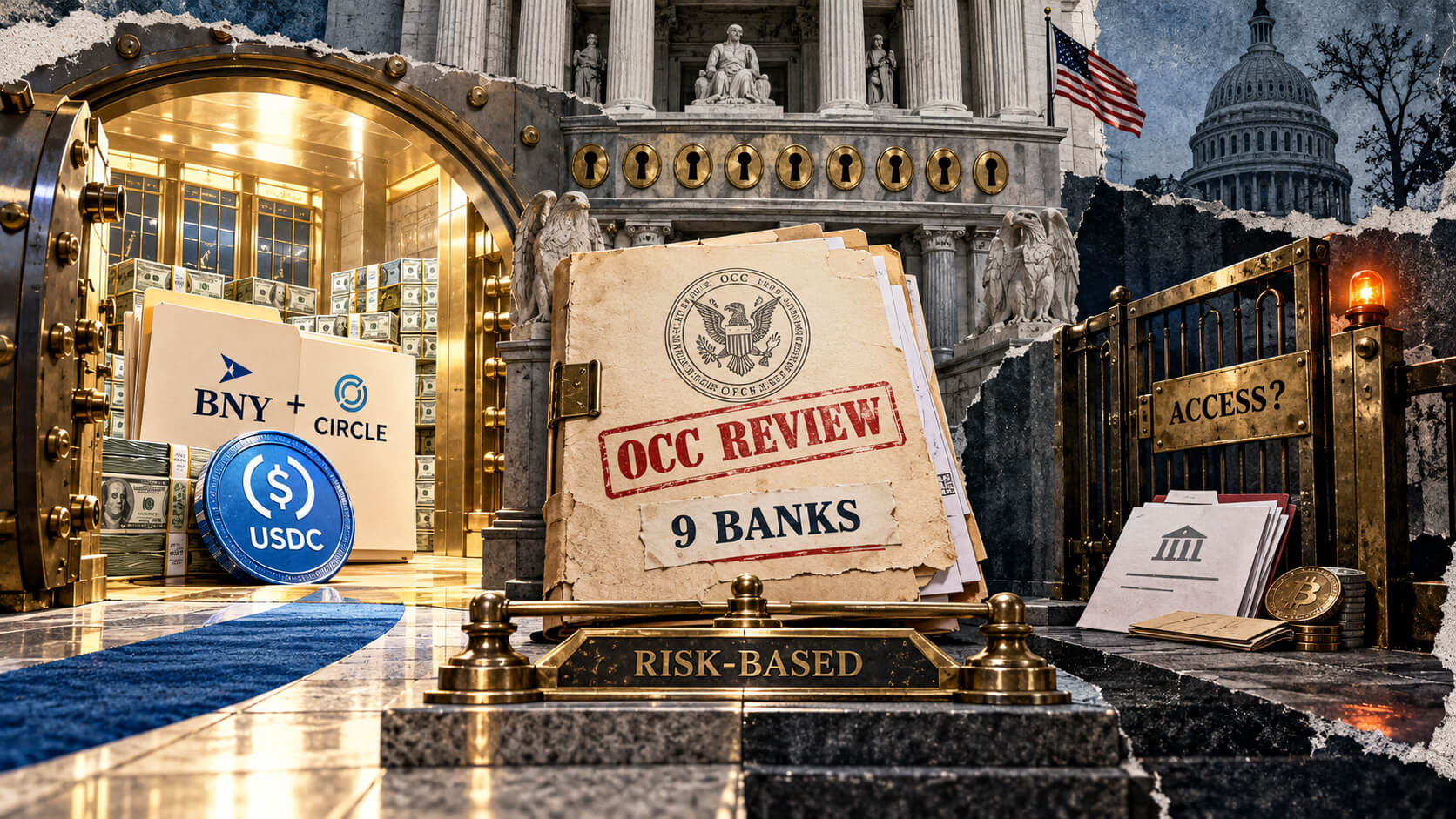
We finally have some data to back up the frustration. A new report involving the Office of the Comptroller of the Currency (OCC) has highlighted that nine major financial institutions have been systematically blocking accounts linked to digital assets. This is not just a handful of rogue compliance officers; it is a coordinated, high-level defensive posture against the entire sector.
The Shadow Ban Is Real
For years, the narrative from the big banks was that they were simply following 'risk-based' protocols. They claimed they were not anti-crypto, just pro-compliance. The OCC findings paint a slightly different picture. While banks cite anti-money laundering (AML) concerns and sanction risks as the primary drivers, the reality is that the operational bar for crypto companies is set significantly higher than for almost any other industry.
When nine of the largest banks in the country decide that a specific vertical is too radioactive to touch, it creates a massive bottleneck for innovation. If you cannot pay your developers in fiat, pay your rent, or pay your taxes because you cannot maintain a basic checking account, you are effectively locked out of the economy. This isn't just a hurdle; it is a wall.
Why the Banks Are Scared
From a founder’s perspective, it is easy to see the banks as the villains. But if we look at it from their seat, the motivation is pure self-preservation. The OCC points out that operational assessments—how a bank actually manages the day-to-day movement of funds—are where crypto companies usually fail the test. The volatility of the assets, the pseudonymous nature of transactions, and the lack of a centralized 'compliance officer' at many protocols make traditional bankers break out in hives.
The banks are terrified of the regulators. They have spent the last decade being beaten over the head with massive fines for AML failures. In their eyes, the upside of holding a few million dollars for a crypto startup is nowhere near worth the downside risk of a billion-dollar fine from the DOJ or the OCC. So, they take the easy way out: they just say no to everyone.
The OCC Is Finally Biting Back
Here is where the story shifts. The OCC is starting to realize that 'de-risking'—the practice of dumping entire categories of customers to avoid scrutiny—is actually a failure of the banking system. New standards are beginning to emerge that tell banks they cannot simply blacklist an entire industry without a granular, case-by-case justification.
The OCC is now pressuring these nine mega-banks to refine their assessments. Instead of a blanket 'no' to anything involving a blockchain, banks are being pushed to actually look at the specific controls a company has in place. If a builder has robust KYC, uses reputable custodians, and maintains clear audit trails, the bank should not be allowed to close the account just because the word 'Bitcoin' appears in the pitch deck.
What This Means for Builders
If you are building in this space right now, you need to stop thinking like a cypherpunk when you walk into a bank and start thinking like a risk manager. The OCC rules might be 'biting back,' but the banks are not going to roll over and welcome us with open arms. They are going to look for any excuse to stay in their comfort zone.
- Documentation is your best friend. You need to have a compliance manual that is thicker than your whitepaper.
- Redundancy is mandatory. Never rely on one bank. If nine banks are blocking accounts, you should have accounts at three different Tier-2 or Tier-3 institutions.
- Transparency over privacy. In your personal life, privacy is a right. In your corporate banking life, opacity is a death sentence.
The Founder Perspective
I have spoken to dozens of founders who have had their personal and business lives upended by these sudden closures. It is demoralizing to build the future of finance while being treated like a criminal by the legacy system. But the tide is turning. The fact that the OCC is even acknowledging this pattern of behavior is a massive win for the industry.
We are moving out of the era of 'unfiltered hostility' and into an era of 'grudging compliance.' It isn't perfect, and it isn't the decentralized utopia many envisioned, but it is progress. The goal for a builder shouldn't be to defeat the banks; it should be to become so compliant and so well-regulated that the banks look foolish for turning you away.
The banking system was built for a world that no longer exists. The friction we are seeing today is the sound of two different eras of value transfer grinding against each other.
The Road Ahead
Expect the big nine to fight these new OCC pressures. They like the status quo because it is easy and safe for their shareholders. However, as more institutional money flows into Bitcoin ETFs and as more traditional finance players launch their own tokenization projects, the 'crypto is too risky' excuse is going to lose its teeth.
If a bank is willing to custody billions in BTC for an ETF provider, they can no longer justify closing the account of a small dev shop that is building on top of that same network. The hypocrisy is becoming too loud to ignore, and the regulators are finally starting to listen.
The Takeaway
The institutional blockade is cracking, but it hasn't crumbled yet. For builders, the OCC’s move is a signal that the regulatory environment is maturing. It is no longer enough for banks to say 'no' just because they are scared. They have to prove why you are a risk. Your job is to make that impossible for them to prove. Stop complaining about the legacy system and start out-regulating it. The tools are finally being put in place to give us a fair shake at the table.
Read the original at CryptoSlate →