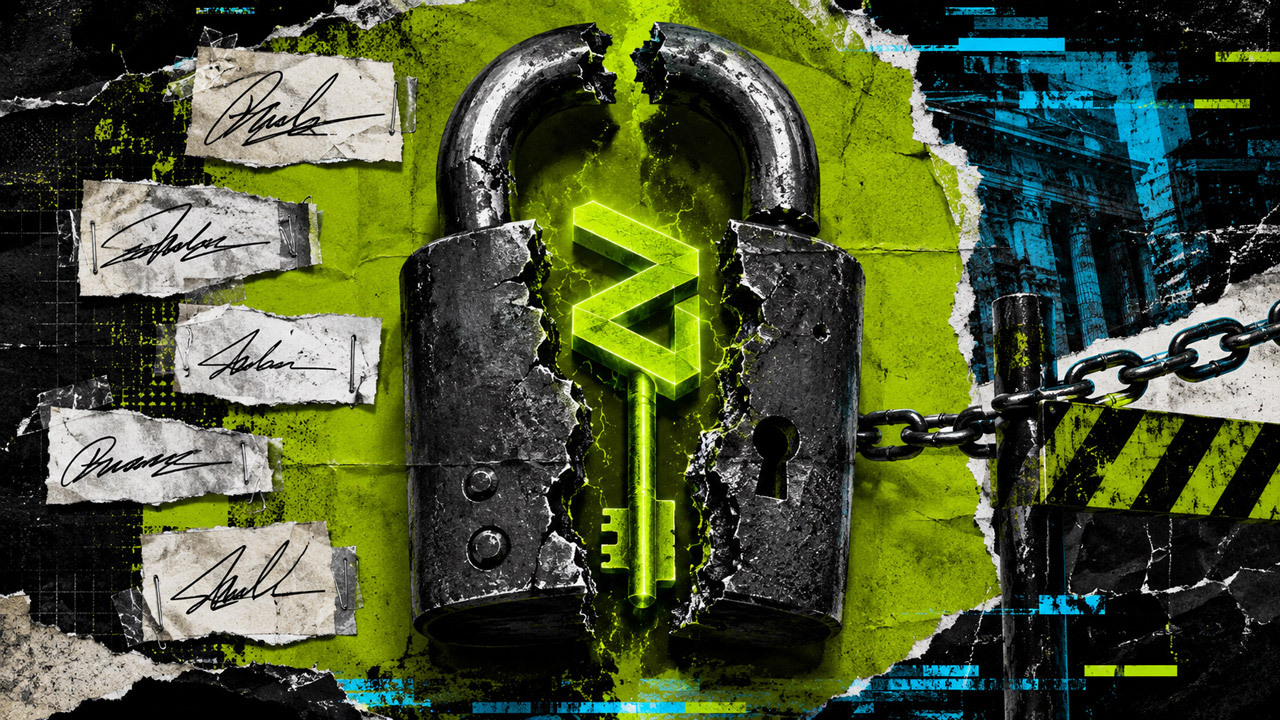
Hardware wallets are supposed to be the final line of defense. The industry sells them as unshakeable vaults where your private keys never touch the internet. But a recent disclosure from the Zilliqa team serves as a brutal reminder that the hardware is only as good as the math and the implementation layer sitting on top of it. This isn't a theoretical edge case; it is a critical vulnerability that lets an attacker rebuild a private key from roughly five signatures in a matter of seconds.
The Math Behind the Leak
The issue stems from how the Zilliqa Ledger app handles Schnorr signatures for native, non-EVM transactions. In simple terms, a digital signature is a mathematical proof that the owner of a key authorized a transaction. For this to stay secure, every signature is supposed to use a unique, random number called a nonce. If that nonce is reused, or if there is a specific kind of mathematical bias in how those nonces are generated, the underlying private key starts to leak data points.
According to the Zilliqa team, the vulnerability has existed for nearly seven years. During that time, if you used a Ledger to sign native ZIL transactions, you were unwittingly dropping breadcrumbs. Once an attacker collects about five of these specific signatures, they have enough variables to solve the equation and extract your private key. After they have the key, the hardware wallet is irrelevant; they can clone your wallet and drain the funds without ever touching your device.
The Race Against the Machine
Zilliqa took the drastic step of suspending native transactions to stop the bleeding. This creates a fascinating, albeit terrifying, scenario for builders and users. If the network is live and a vulnerable account tries to move its funds to a new, safe wallet, that very act of moving the funds creates a signature. If that signature is the one that tips the scale and allows the key to be reconstructed, an attacker running a monitoring script could theoretically calculate the key and front-run the rescue transaction.
This is why the Zilliqa team is treating this as a recovery race. You cannot just send a standard transaction from the affected wallet because the signature required to send that transaction might be the final piece of the puzzle for a hacker. It is a locked-room mystery where the act of unlocking the door might give the killer the key. Developers are now tasked with creating specialized tools and secure pathways to migrate these funds without triggering a catastrophic exploit.
Why This Matters for Builders
For those of us building in this space, this is a lesson in technical debt and the fragility of custom implementations. Zilliqa’s move toward EVM (Ethereum Virtual Machine) compatibility is what saved a large portion of the ecosystem, as the EVM side of the network wasn't affected by this specific Ledger app flaw. It highlights the risk of going 'off-road' with bespoke cryptographic libraries when standardized, battle-tested alternatives exist.
As a founder, you have to weigh the desire for innovation against the reality of long-term maintenance. This bug lived in the wild for seven years before being properly diagnosed. That is a lifetime in crypto. It suggests that our audits are often surface-level and that the most dangerous bugs are the ones buried in the mathematical implementation of the signing process itself, rather than the smart contract logic we usually obsess over.
The Reality of Cold Storage
We often tell people to 'get a Ledger and forget about it.' But the Zilliqa situation proves that cold storage is not a set-it-and-forget-it solution. Hardware wallets are still running code, and that code is being maintained by small teams who are often juggling multiple different blockchain standards. If you have assets sitting in native protocols that use custom signing logic, you are carrying more risk than you think.
This isn't necessarily a failure of Ledger the company, but a failure of the specific app integration for Zilliqa. However, for the average user, that distinction doesn't matter. The takeaway is that hardware wallets do not protect you from bad math. If the signing algorithm is flawed, the physical security of the chip is moot.
- Check your exposure: If you have used Zilliqa’s native app on Ledger for years, your account is likely in the danger zone.
- Wait for the fix: Do not attempt to move funds until the official recovery tools or network upgrades are finalized. Moving funds manually could expose your key.
- Diversify your tech: Relying on a single hardware vendor or a single signing method for all your assets creates a single point of failure.
A Founders Perspective
I have seen plenty of 'hacks' that were just social engineering or poorly written smart contracts. This is different. This is a fundamental cryptographic failure in a production environment. For those of us running projects, we need to be more skeptical of 'black box' solutions. We need to ask harder questions of the middleware and the hardware integrations we recommend to our communities.
Zilliqa is doing the right thing by pausing the network, even if it hurts their reputation for uptime. In crypto, security is the only thing that actually matters. If you lose the trust of the people holding the keys, you lose the network. The coming weeks will be a test of whether the Zilliqa team can execute a clean migration for the affected users or if the attackers will win the race to the private keys.
The era of blind trust in hardware is over. We are entering an era of verification where builders need to understand the full stack, from the silicon to the signature.
Read the original at CryptoSlate →