The Shift from Centralized Command to Open Infrastructure
NASA Johnson Space Center just hit the 65-year mark. In the world of tech and crypto, we talk about legacy systems, but this is the ultimate legacy stack. For over six decades, this single facility in Houston has been the centralized hub for every major human milestone in space, from the early Gemini maneuvers to the decades of continuous residency on the International Space Station.
As a builder, looking at Johnson isn't just a history lesson; it is a case study in how a centralized authority transitions into an ecosystem enabler. When Johnson started, the government owned the entire stack. They built the hardware, wrote the code, and managed the operations. Today, we are seeing the Great Unbundling of space. The role of the Johnson teams is shifting from being the sole pilots to being the architects of a decentralized orbital economy.
The Gemini Blueprint for Modern Protocols
If you look back at the Gemini missions, they weren't just about putting people in orbit. They were about testing rendezvous and docking—the literal handshake protocols of space. In the 1960s, these were experimental physical connections. In our world, we call these APIs and interoperability standards.
The lessons learned during those early years at Johnson are surprisingly relevant to anyone building complex systems today. You don't start with the moon landing; you start by figuring out how two autonomous units can find each other, communicate, and exchange state without exploding. That is what Gemini was. It was the MVP for the Apollo missions. For founders, the takeaway is clear: the infrastructure for the 'giant leap' is always built in the unglamorous, iterative testing of basic connectivity.
Stability Over Hype
The International Space Station has been inhabited for over 26 years straight. That is an incredible uptime record. In a landscape where we see protocols go down for hours due to congestion or bad governance, the ISS represents the gold standard of high-availability systems. The teams at Johnson have managed this through decades of hardware swaps, software patches, and political shifts.
This is what 'building for the long term' actually looks like. It isn't about the flashiest launch; it is about the maintenance of the life-support systems. In the current AI and crypto cycle, we often prioritize speed over resilience. Johnson reminds us that if you want a system to last a quarter-century, you need deep redundancy and a culture that values stability over the hype of the next upgrade.
Why Builders Should Care About the Artemis Shift
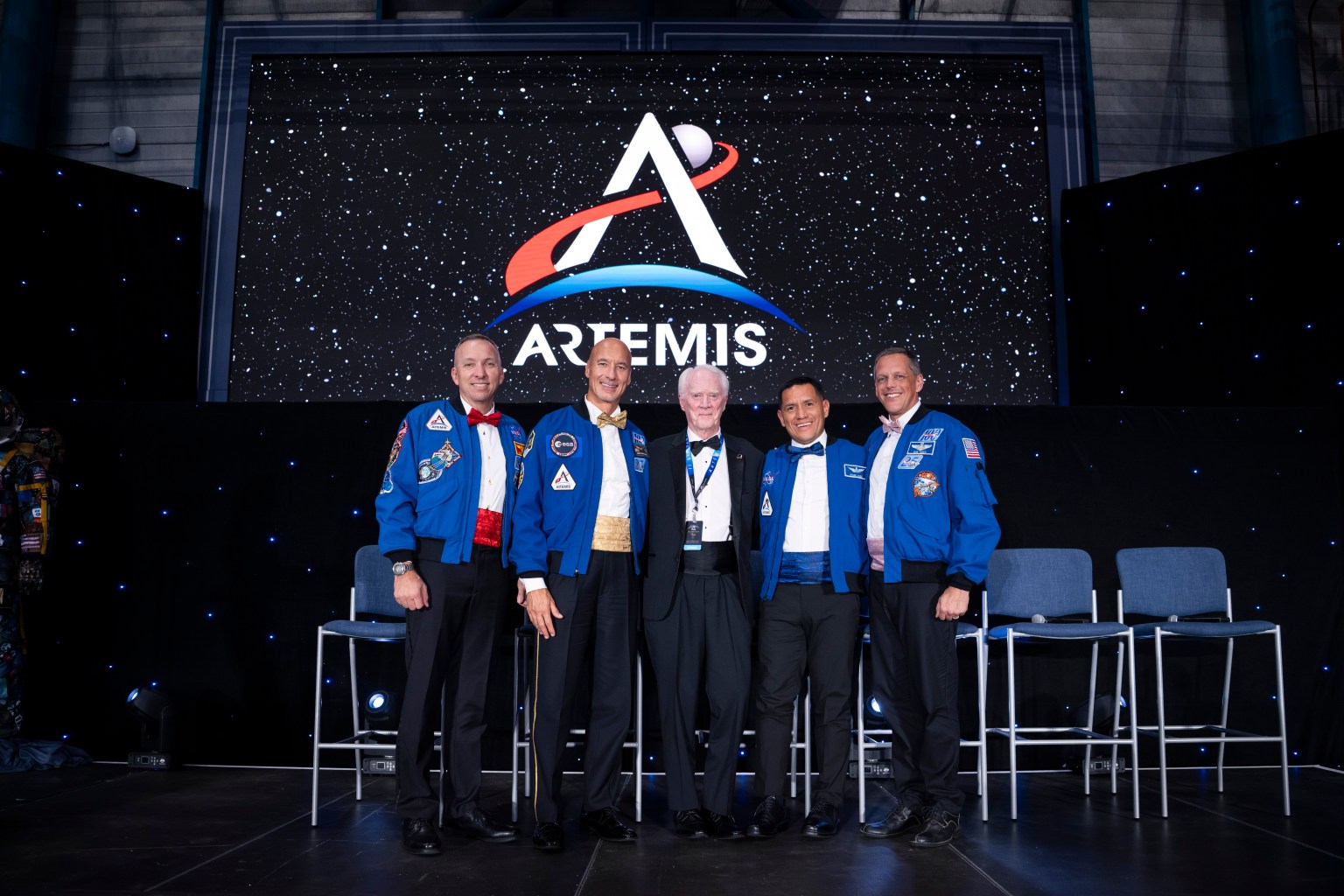
Right now, Johnson is pivoting toward the Artemis program. But this isn't just Apollo 2.0. The architecture is different. The mission now involves more private-public partnerships than ever before. We are moving toward a model where NASA provides the mission framework, but the private sector provides the modules, the transport, and the data layers.
For those of us in AI and decentralized tech, this is our entry point. Space is becoming a data-heavy environment. As we move back to the moon and eventually toward Mars, the latency issues alone mean we cannot rely on centralized Earth-based clouds. We need edge computing, autonomous navigation, and decentralized data storage. The next 65 years at Johnson won't be about mission control telling an astronaut what button to push in real-time; it will be about managing autonomous agents that can handle those decisions on the fly.
The Founder Perspective on Legacy Systems
One of the hardest things to do in tech is to innovate while maintaining a legacy system that people's lives depend on. Johnson has been doing this for 65 years. They are still using systems that predate the internet while integrating modern AI-driven flight paths. It’s a messy, complicated reality that most startups try to avoid by 'disrupting' everything at once.
But true disruption often happens at the edges of these legacy institutions. The fact that NASA is opening up its docking standards and its procurement processes means that a small team with a better computer vision algorithm or a more efficient consensus mechanism for satellite swarms has a seat at the table. You don't need to be a government contractor with 10,000 employees anymore; you just need to solve a specific problem within the framework Johnson has spent 65 years defining.
The Future is Decentralized and Autonomous
Looking ahead, the goal is no longer just 'presence'—it is 'sustainability.' This means moving from a model where everything is shipped from Earth to a model where we utilize local resources. In crypto terms, this is about moving from a bridge-reliant ecosystem to one with native liquidity. We need to be able to build and sustain without the 'central exchange' of Earth being the only source of truth.
Johnson is currently training crews for missions that will test these exact concepts. They are moving away from the 'low Earth orbit' comfort zone into deep space. This is the ultimate test for any builder: can your system survive when the cord is cut? When the latency is minutes instead of milliseconds? This is where AI becomes a necessity rather than a luxury.
The Real Takeaway
The 65-year anniversary of Johnson Space Center isn't just a celebration of the past; it's a signal of a massive transition. The centralized era of space exploration is over. We are entering an era of open-source space, where the roles of government agencies, private builders, and autonomous systems are blurring.
The infrastructure of the future isn't built in a vacuum; it is built on the hard-won lessons of the systems that came before it.
If you are building in AI or crypto, stop looking at space as a sci-fi niche. Look at it as the ultimate stress test for your tech. If your protocol can't handle a network partition, it definitely can't handle the moon. If your AI can't run on low-power edge hardware, it has no place on a Mars rover. The next 65 years will be defined by the builders who can bridge the gap between Houston’s legacy of excellence and the decentralized future of the stars.
Read the original at NASA Breaking News →