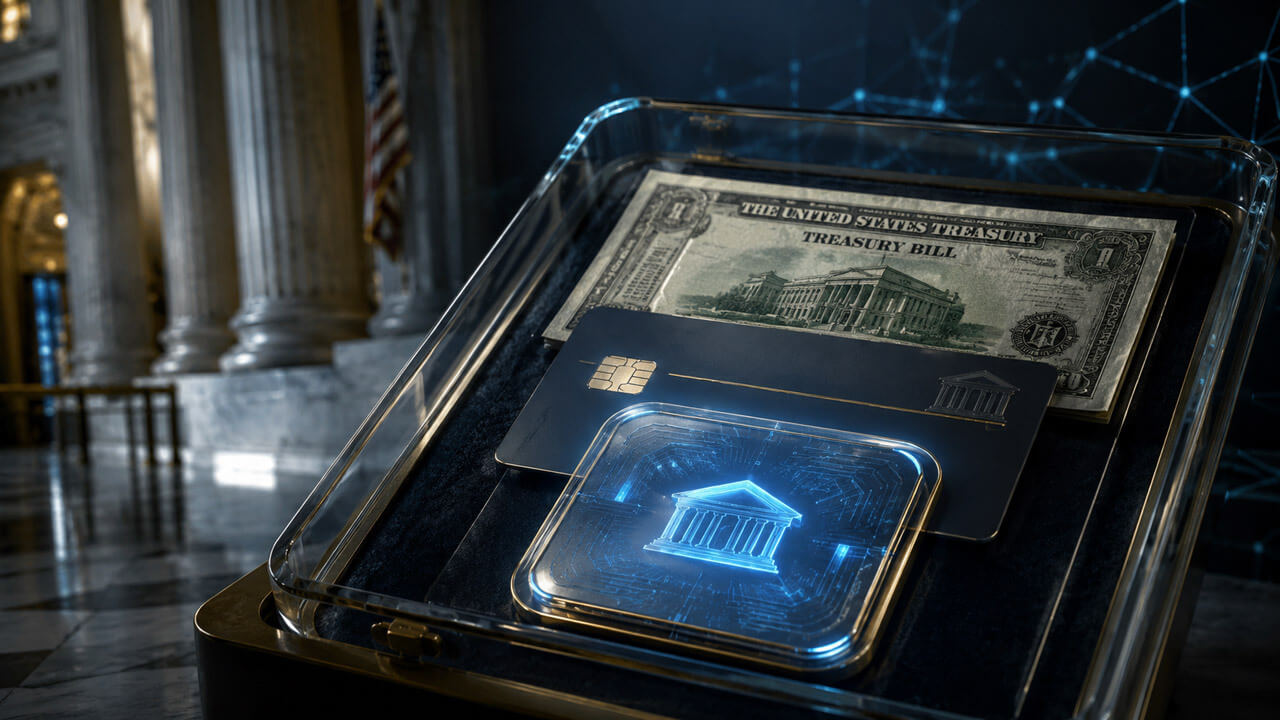
The End of the Slap-and-Tokenize Era
For years, the idea of putting U.S. Treasuries on a blockchain felt like typical conference room jargon. We heard the term "Real World Assets" or RWA so many times it started to lose meaning. Most of the early attempts were clunky, regulatory nightmares that offered no real improvement over a standard brokerage account. They were basically just wrappers in search of a problem.
But the market is shifting. We are seeing a $407 million Treasury fund move from being a proof-of-concept to becoming a functional piece of the financial plumbing. This isn't about making headlines or riding a trend; it is about building the missing collateral layer that the digital asset space has desperately needed since its inception. If you are building in this space, you need to pay attention to how Wall Street is finally making peace with the ledger.
Solving the Dead Capital Problem
The primary issue for crypto-native builders has always been the volatility of collateral. If you use ETH to back a loan, your liquidation risk is high. If you use stablecoins, you are often sitting on "dead capital" that earns nothing while the issuer pockets the yield from the underlying reserves. It is a one-sided deal that flavors the entire ecosystem with unnecessary risk.
Tokenized sovereign debt changes that math. By turning government paper into a digital asset, builders can now access the safety of the risk-free rate while keeping that capital mobile. This isn't just about earning a 5% yield; it is about having an asset that DeFi protocols, exchanges, and lending desks actually trust as high-quality collateral. When the market turns red, people don't want a governance token; they want the stability of the U.S. Dollar backed by the Treasury.
The Infrastructure is Finally Catching Up
We are moving past the phase of just minting tokens. The real work is happening in the programmable transfer rails and the on-chain ownership records. The current $407 million fund is a signal that the plumbing—the settlement layers and the legal frameworks—is finally robust enough to handle institutional volume. Wall Street isn't just experimenting; they are rebuilding their back offices.
The real innovation here isn't the token itself, but the fact that we can now move the most liquid asset in the world at the speed of the internet without a weekend-long settlement delay.
For a founder, this represents a massive opportunity to build services that bridge the gap. We are no longer limited to "crypto-only" liquidity pools. We are looking at a future where a treasury bill can be used to margin a trade on a decentralized exchange in real-time. That level of efficiency makes the current banking system look like it’s running on steam power.
The Skeptic’s Corner: Regulation and Centralization
I have to be honest: this isn't the cypherpunk dream. Tokenized Treasuries are inherently centralized. There is a whitelist, there is KYC, and there is an issuer who can freeze those assets at the push of a button. We shouldn't pretend this is "permissionless" in the way Bitcoin is. It’s a hybrid model, and that comes with trade-offs.
Builders need to be careful about over-reliance on these assets. If the regulatory climate shifts or an issuer gets spooked, the liquidity you thought you had could vanish. We are essentially importing the rules of traditional finance into the digital realm. It makes the system more stable, but it also makes it more subservient to the powers that be. You have to decide if that is a trade-off your protocol can handle.
Why Builders Should Care Right Now
If you are developing a fintech app or a DeFi protocol, the integration of these funds is your new North Star. The days of convincing users to hold speculative tokens just for the sake of utility are fading. Users want the security of traditional assets with the ease of digital transactions. The first builders to successfully integrate these $400M+ funds into their yield products or collateral pools are going to win the trust of the "normie" capital that has stayed on the sidelines.
The Technical Shift
- Programmability: You can now automate what happens when a treasury bond matures or how interest is distributed to holders via smart contracts.
- Instant Liquidity: No more T+2 settlement. You can move in and out of positions as fast as the block time allows.
- Transparency: While the users are KYC'ed, the proof of reserves is public. You can see the health of the fund without waiting for a quarterly audit report.
Reframing the Value Proposition
Stop thinking about this as "crypto." Start thinking about it as the upgrades to the global financial operating system. The $407 million currently sitting in this specific Treasury fund is just the tip of the iceberg. As more of the $27 trillion Treasury market moves on-chain, the builders who understand the plumbing will be the ones who control the flow.
The skepticism remains—mostly around the central points of failure—but the utility is becoming undeniable. We are watching the construction of a new foundation. It might be centralized, it might be heavily regulated, but it is also the first time that digital assets have a genuine, stable floor beneath them.
The Takeaway
Wall Street is not coming to disrupt crypto; they are coming to co-opt the technology to fix their own aging systems. For builders, this means the "missing collateral layer" is finally being installed. The play here isn't to fight the centralization, but to build the tools that make this institutional capital more useful, more liquid, and more accessible to the next generation of users. The hype is dead, and the era of functional, tokenized debt is finally here. Don't get caught building on a foundation of sand when the concrete is being poured.
Read the original at CryptoSlate →